What makes a wine relevant today? For many sommeliers, the answer lies in authenticity: wines that reflect their place, respect their environment and tell a story that extends beyond the cellar. Few Portuguese estates illustrate that shift more clearly than Herdade do Esporão.
The Portuguese wine industry has changed profoundly over the last four decades. Once known primarily for value and tradition, it now commands serious attention from collectors, sommeliers and fine-wine buyers around the world. Among the producers that helped shape that transformation, Herdade do Esporão occupies a distinctive position.
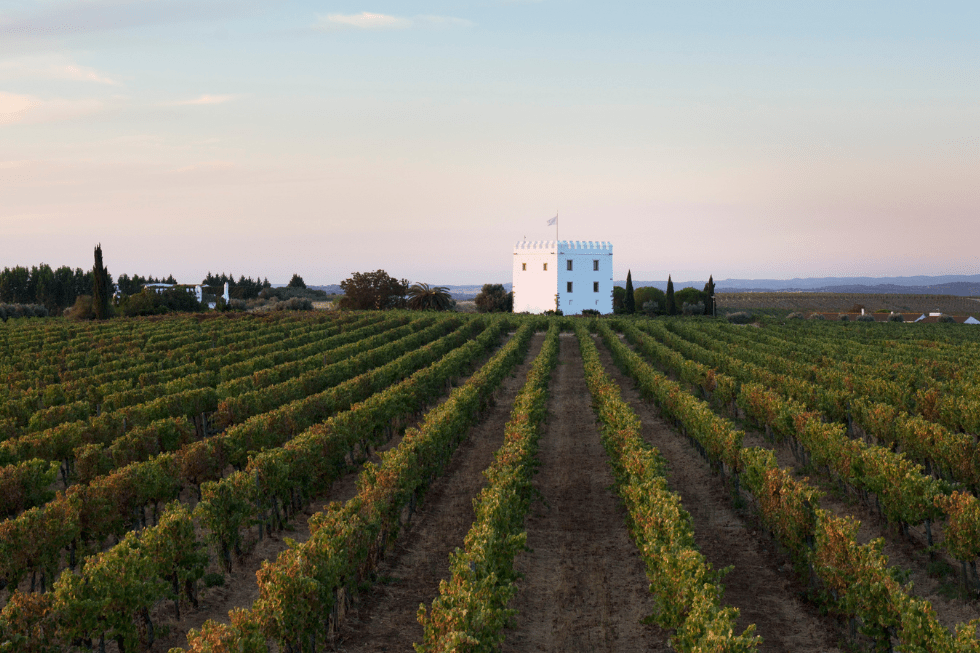
Located in Alentejo, on an estate whose boundaries have remained unchanged since 1267, Esporão sits at the intersection of history and modernity. Its contemporary story began with the release of the first Esporão Reserva in 1985, a wine that would become both a benchmark for the estate and a reference point for a new generation of Portuguese wine. Today, the company exports to more than 50 markets and oversees one of the country’s most influential fine-wine portfolios.
Yet what makes Esporão relevant to today’s sommeliers is not simply its scale or history. Rather, it is the way the estate has evolved in response to some of the most important conversations shaping wine today: sustainability, biodiversity, grape diversity, and the search for wines that genuinely express their origin.
At Esporão, we like to move forward at nature’s pace. It means creating, innovating, and cultivating with care and responsibility while leaving enough time to enjoy.
Slow Forward
The phrase most closely associated with the estate is “Fine Wines Made at Nature’s Pace”. It may sound like marketing shorthand, but it reflects a philosophy that has increasingly informed every aspect of production. Esporão’s own “Slow Forward” manifesto argues that quality requires time, care and restraint. As the company puts it, ” At Esporão, we like to move forward at nature’s pace. It means creating, innovating, and cultivating with care and responsibility while leaving enough time to enjoy.”
That philosophy is visible in the vineyards. The estate achieved full organic certification in 2019 after years of transition and investment in biodiversity-focused agriculture. In a region already dealing with the realities of climate change, Esporão has pursued a long-term approach that prioritises soil health, ecological balance and resilience.
Speaking about the conversion, chairman João Roquette explained that the ambition was not simply environmental stewardship but quality itself. According to Roquette, the company believes that “by working with nature and not against it, they can make the best wines” and seeks “to make the finest wines in Portugal while respecting the limits and potential that nature provides.”
That idea resonates strongly with contemporary sommeliers. Increasingly, restaurant wine programmes are moving away from wines defined primarily by winemaking technique and towards wines shaped by farming. In this respect, Esporão’s evolution mirrors a broader shift within fine wine itself.
189: an important number
One of the clearest examples is the estate’s 10-hectare ampelographic field, home to 189 grape varieties. At a time when climate adaptation has become an urgent concern across the wine world, this living collection functions as both a research project and an insurance policy for the future. Rather than relying on a narrow selection of internationally recognised grapes, Esporão continues to invest in understanding which varieties may be best suited to future conditions in Alentejo.
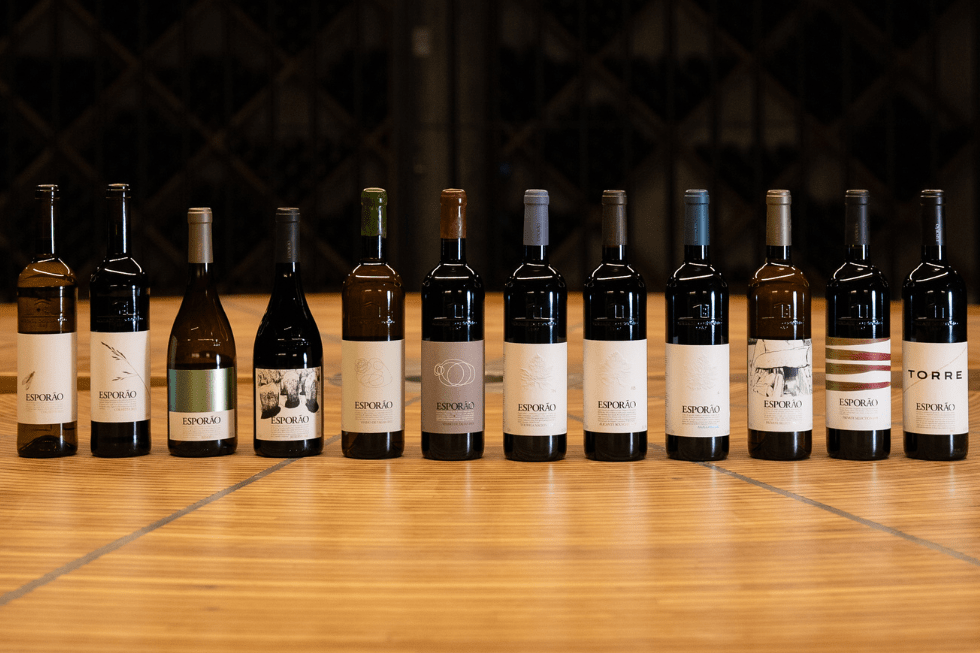
The same balance between innovation and tradition can be found in the cellar. Esporão operates three specialist wineries and produces a vast range of wines, from Monte Velho and Esporão Colheita through to Private Selection and Torre do Esporão. Yet despite that breadth, the most interesting development over the past decade has arguably been a renewed focus on regional identity.
The concrete vats help maintain this earthier, more elementary character of the wine. When we have the elements earth, water, sun and air on our team, we don’t want to hide them but rather enhance them. Everything else is superfluous.”
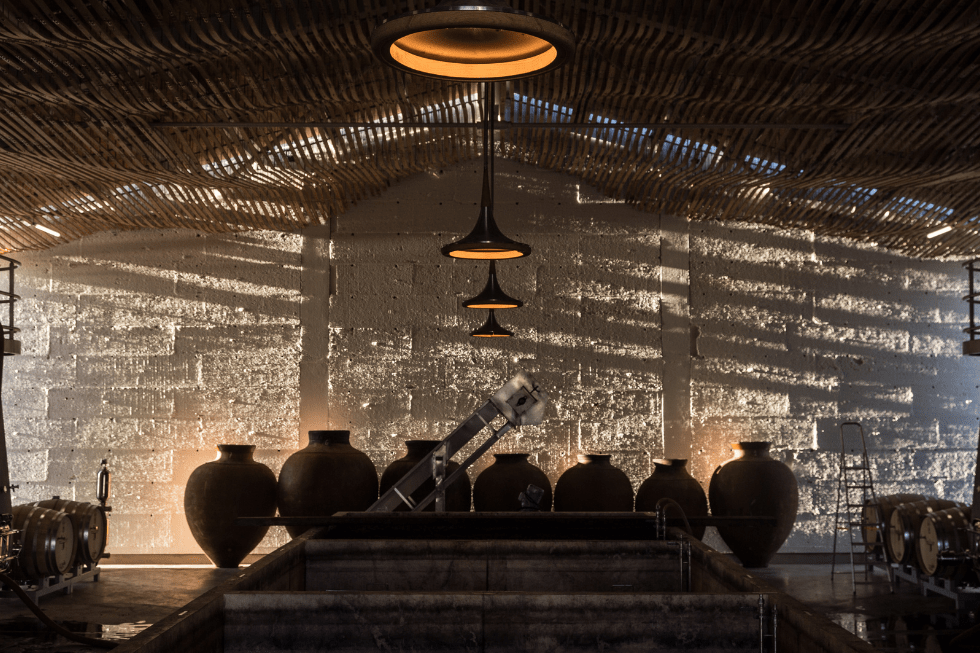
Industry observers have noted a gradual movement away from the more international style that characterised many ambitious producers during the 1990s and early 2000s. Wine commentator Wine Disclosures observed that Esporão’s recent evolution reflects a return toward Alentejo’s traditional culture, grape varieties and winemaking heritage, including renewed attention to talha and amphora wines.
From the winemaking team’s point of view, when it comes to Esporão Colheita, the concrete vats help maintain this earthier, more elementary character of the wine;. By blending together all the elements of earth, water, sun and air the team ensure that these important components are not hidden but rather enhanced. For the Esporão’s winemakers everything else is superfluous.
It is a striking philosophy because it captures a growing sommelier preference for transparency over manipulation. Rather than aiming for a universal style, the objective is to reveal place and provenance.
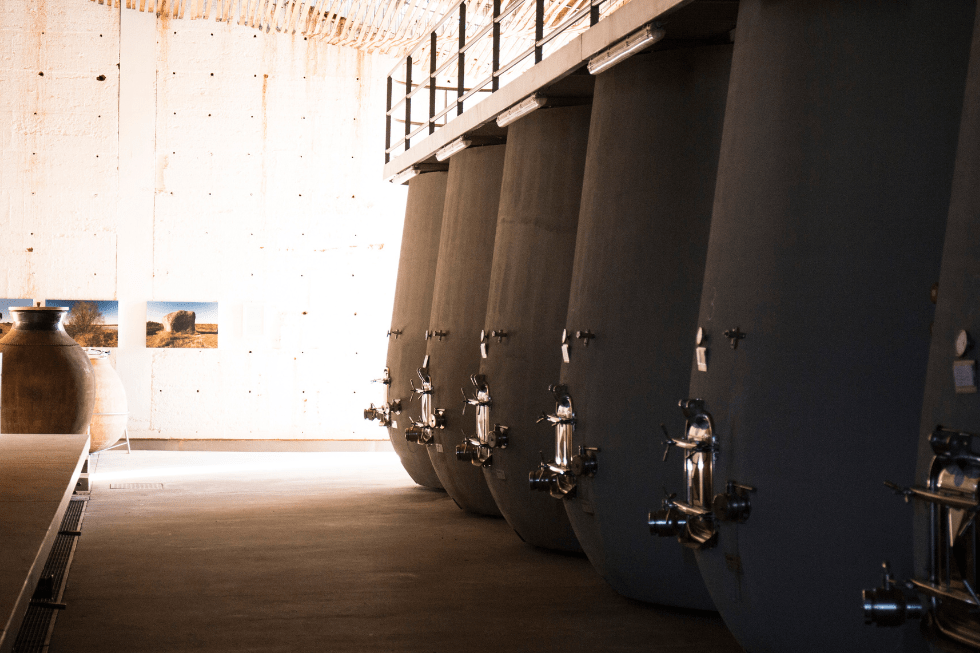
Amphora authenticity
This is also why Esporão’s amphora wines have attracted attention among leading wine professionals. In embracing talha fermentation, the estate is not merely reviving a historical curiosity but reconnecting with one of Alentejo’s oldest winemaking traditions. The wines offer a compelling bridge between ancient practice and modern expectations of freshness, texture and authenticity.
Critics frequently describe Esporão’s flagship wines as balanced, elegant and harmonious rather than powerful for power’s sake. The Reserva range in particular is regularly praised for combining concentration with freshness and structure, qualities that make the wines especially versatile in a gastronomic setting.
There is another dimension that sets the estate apart: culture. Since the first vintage, art has been embedded in the identity of Esporão. Every vintage of Reserva and Private Selection features a different artist, turning each release into both a wine and a cultural artefact. In a world where many brands pursue consistency above all else, the changing labels provide a subtle reminder that wine remains an agricultural product, shaped by seasons and human interpretation.
Ultimately, the importance of Herdade do Esporão lies in its coherence. The history, the organic viticulture, the vineyard research, the amphora wines, the artistic collaborations and the commitment to Portuguese varieties all point in the same direction.
At a moment when wine professionals are reassessing what constitutes luxury and excellence, Esporão offers a persuasive answer: not speed, scale or fashion, but patience. Esporão’s mission is not to obscure nature but to reveal it – which remains their defining ambition.