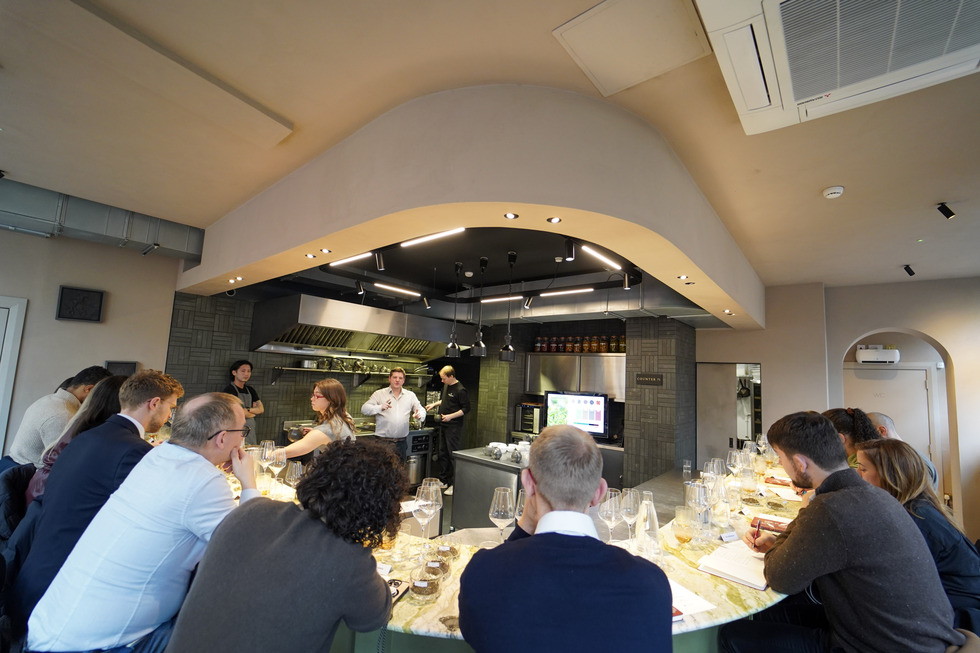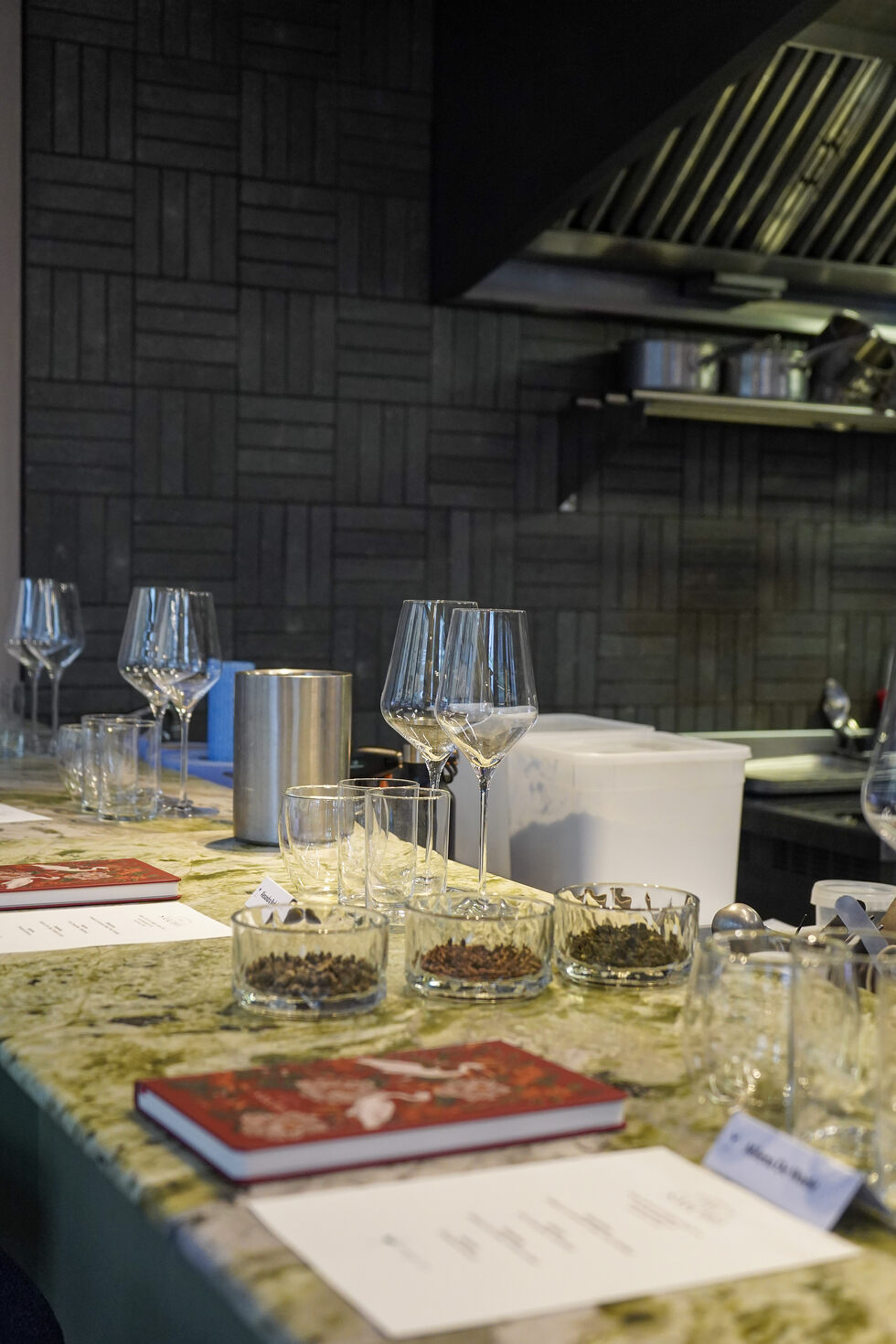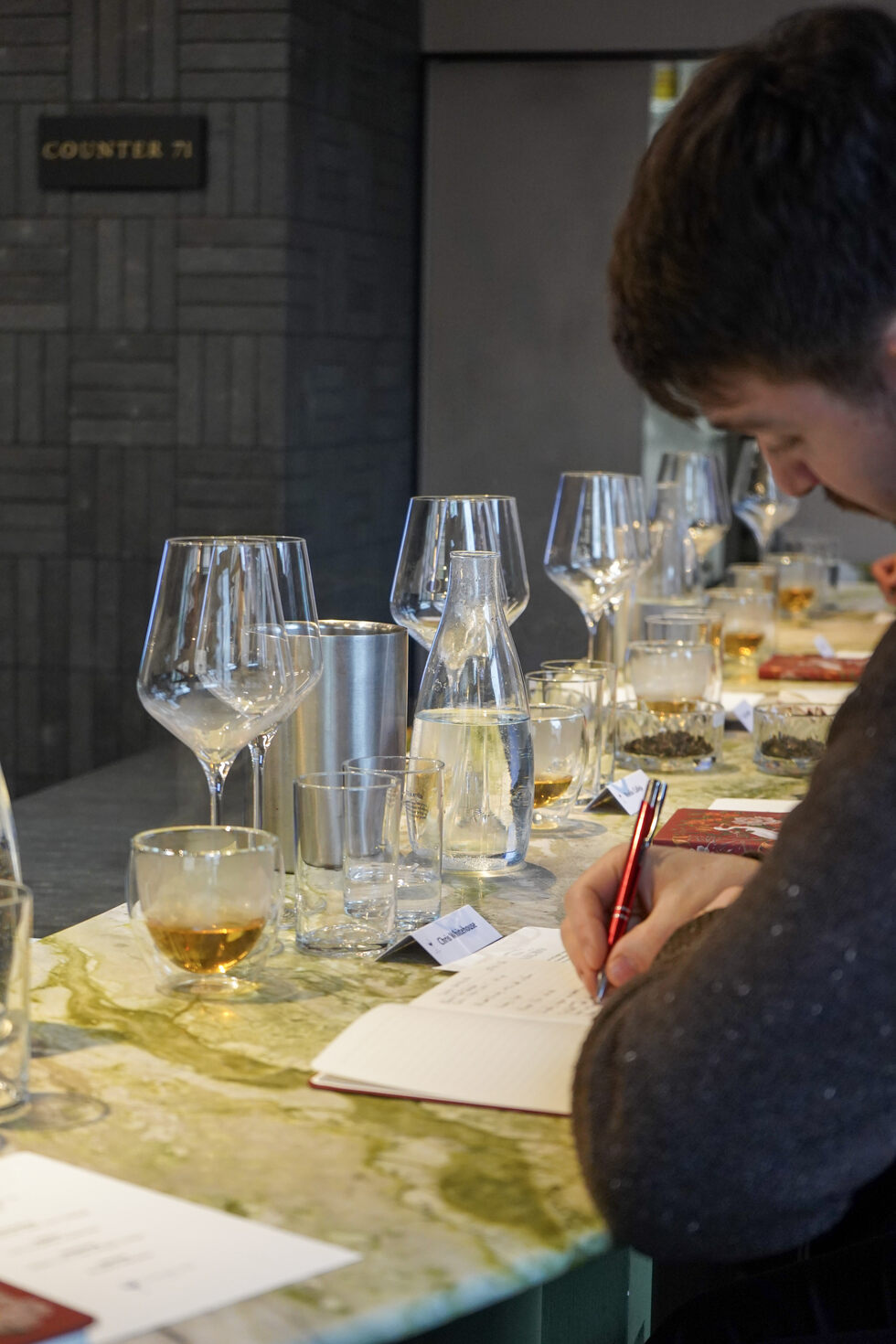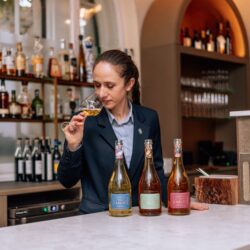
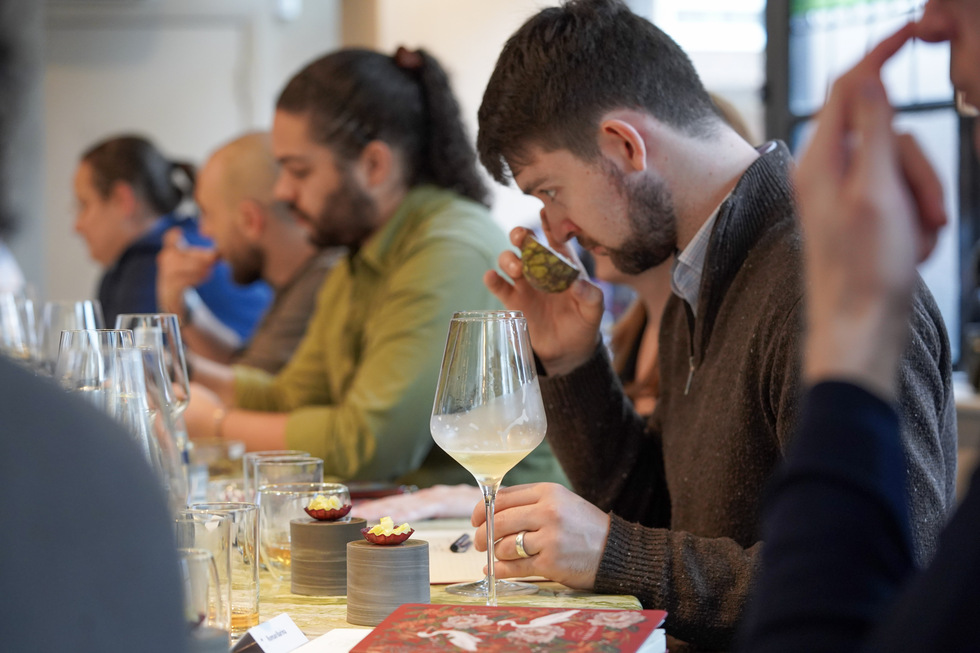
A dedicated single-origin tea masterclass for UK sommeliers elevated tea from an afterthought to a terroir-driven drink worthy of the same scrutiny as fine wine.
With the rise of elevated non-alcoholic pairings in Michelin-level dining rooms, understanding how tea behaves in the glass is no longer optional. Sparkling teas are rapidly becoming the beverage category sommeliers need to master.
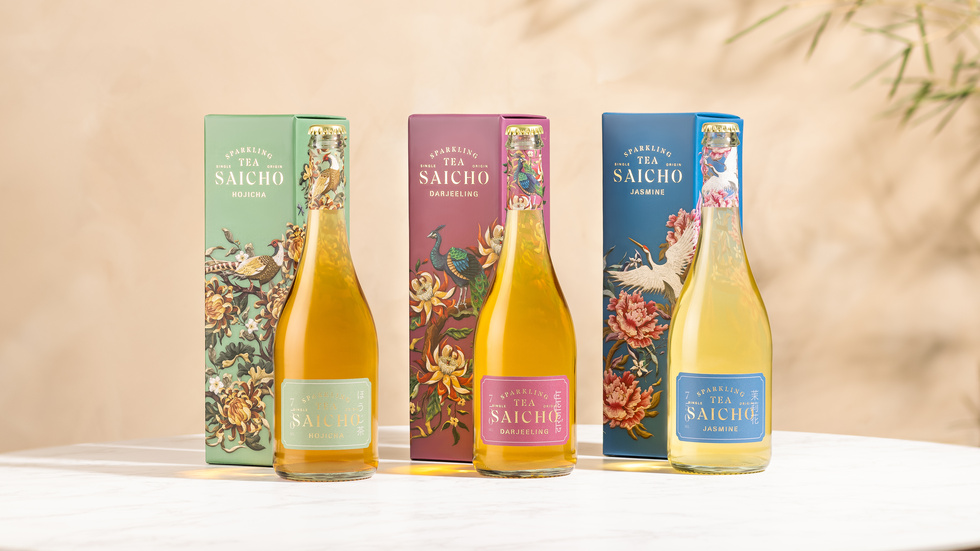
The end of masterclass’s quiz highlighted ten key facts that every sommelier should take away about single-origin tea, sparkling tea, and Saicho Sparkling Teas‘ distinctive style.
1. Single Origin Means Terroir Matters
In wine, “single vineyard” telegraphs geographic specificity. In tea, “single origin” serves a similar purpose, denoting leaves grown in one specific geographical region. This matters because region dictates cultivar, altitude, climate and soil — all of which express as structure, aromatics and complexity. For sommeliers, this invites a familiar lens of terroir analysis: Fujian’s florality vs. Darjeeling’s high-mountain grip, for example.
2. Sparkling Tea Is Not Fermented Wine
Sparkling tea often finds itself compared to Champagne or pét-nat, but Saicho’s expression is fundamentally different. It is cold brewed, not hot brewed or fermented. Cold extraction over 24 hours unlocks delicate aromatics and avoids astringency, producing clarity of flavour instead of tannic bite. When carbonated and lightly balanced, the result is vinous without the alcohol — hence its compatibility with fine dining.
3. Not All Tea Comes From the Same Plant
Sommeliers who understand grape varietals should likewise appreciate tea varietals. The tea plant Camellia sinensis has two major varieties: var. sinensis (small-leaf, Chinese type) and var. assamica (large-leaf, Assam type). These influence body, bitterness, and oxidation potential — much as grape genetics shape phenolics. Mapping these differences helps explain why Assam builds strength for blends while Fujian yields elegant whites and oolongs.
4. Grapes Still Play a Role, Just Not Fermented Ones
A defining signature of Saicho sparkling tea is the addition of Spanish Airén grape juice. This is not to initiate fermentation, but to provide fruit sweetness and balance in lieu of dosage. Airén, valued for its neutral profile, contributes texture without overt varietal character, allowing the tea to remain the star.
5. Hojicha’s Nutty Aromatic Comes from a Key Production Stage
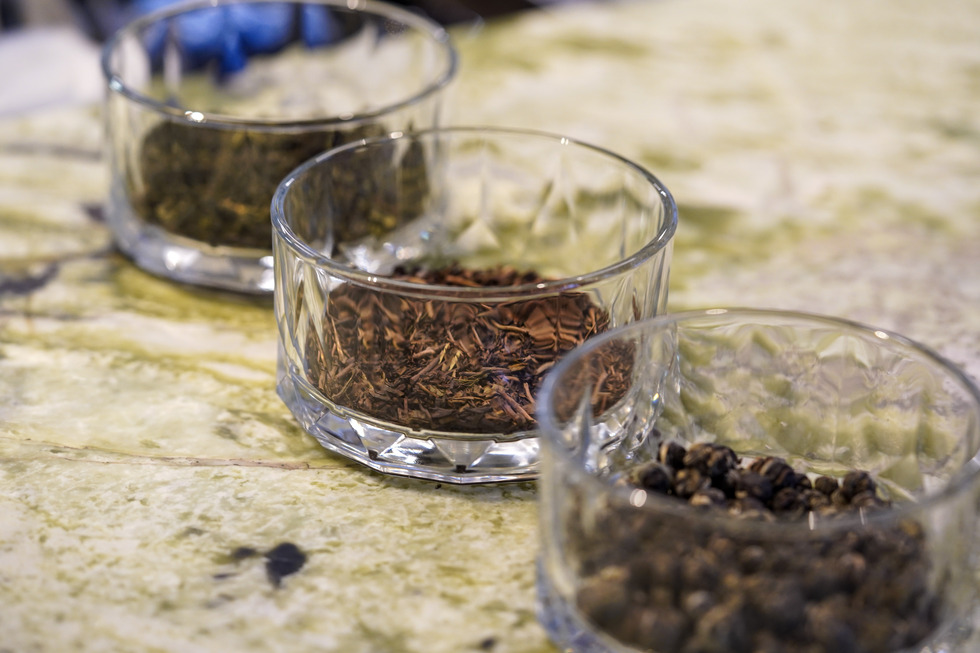
Tea flavour is shaped by post-harvest handling. In Hojicha’s case, the distinctive roasted-nutty aroma comes from roasting the tea leaves. This differentiates it from sencha, gyokuro or matcha — all green teas processed without that final roast. The result is lower caffeine and umami-rich warmth, making it surprisingly pairing-friendly with savoury dishes.
6. Seasonality is as Important for Tea as for Wine
Darjeeling is one of the few tea regions with pronounced seasonal “flushes.” Saicho sources from the summer flush (May–June), when muscatel aromatics are at peak expression. As with grapes, harvest timing dictates phenolics and aromatics. For sommeliers, this parallels the difference between early-picked Loire Chenin and late-picked Mosel Riesling: the core variety remains, but the flavour profile shifts dramatically.
7. Scenting Requires Patience and Repetition
The jasmine tea used by Saicho isn’t flavoured artificially; jasmine buds are layered with green tea repeatedly. It takes four scenting cycles to achieve the required aromatic purity. Each cycle infuses floral compounds slowly and naturally, explaining why authentic jasmine tea avoids the artificial “perfume” sometimes encountered in commercial examples.
8. Osmanthus Oolong Requires Extended Scenting Time
While jasmine relies on repeated cycles, Osmanthus Oolong depends on duration. The oolong leaves are mixed with osmanthus blossoms for 48 hours total. The result is a unique aromatic profile described in the session as apricot-forward with cool cucumber and custard-apple undertones — a distinctly different floral register than jasmine.
9. Jasmine Has a Defined Flavour Signature
When evaluating Saicho’s Jasmine Sparkling Tea, sommeliers should look for lychee, apple and vanilla. This combination makes jasmine one of the most versatile for pairing: lychee notes complement spice and acidity, green apple freshness suits seafood, and vanilla rounds out creamy desserts. Notably, these are structural analogues to off-dry Riesling or demi-sec Chenin pairings.
10. Service Matters: Treat It Like Champagne
Finally, presentation and service reinforce value. Saicho is served in a wine glass or champagne flute chilled to 8°C, with no ice. This not only respects aroma development but positions the beverage correctly within the sommelier’s toolkit — not as a soft drink, but as a gastronomic pairing option. Once opened, refrigeration and an airtight bottle stopper maintain sparkle and freshness.
Why This Matters for Modern Sommeliers
Non-alcoholic drinking has moved beyond basic and often unimaginative “juice pairing.” Restaurants — including Michelin-level dining rooms — increasingly require consistent, sophisticated alternatives. Saicho’s positioning within more than 100 Michelin-starred restaurants across 20 countries demonstrates that demand is not hypothetical, but already here.
For UK sommeliers, mastery of single-origin sparkling tea offers several advantages:
- Terroir storytelling without ABV
- High-margin pairing potential
- Inclusivity for non-drinking guests
- Menu-bridging across cultures and cuisines
Most importantly, it expands the sommelier’s role beyond wine — into a broader world of fermented, brewed and crafted beverages that share the same language of terroir, process and sensory analysis.
As the masterclass demonstrated, single-origin tea is no longer a “soft option” but a serious drink, rooted in craft, pedigree and place. And for those shaping the future of UK beverage programs, understanding these ten foundational points is the first step in elevating tea to its rightful position alongside the world’s great drinks.
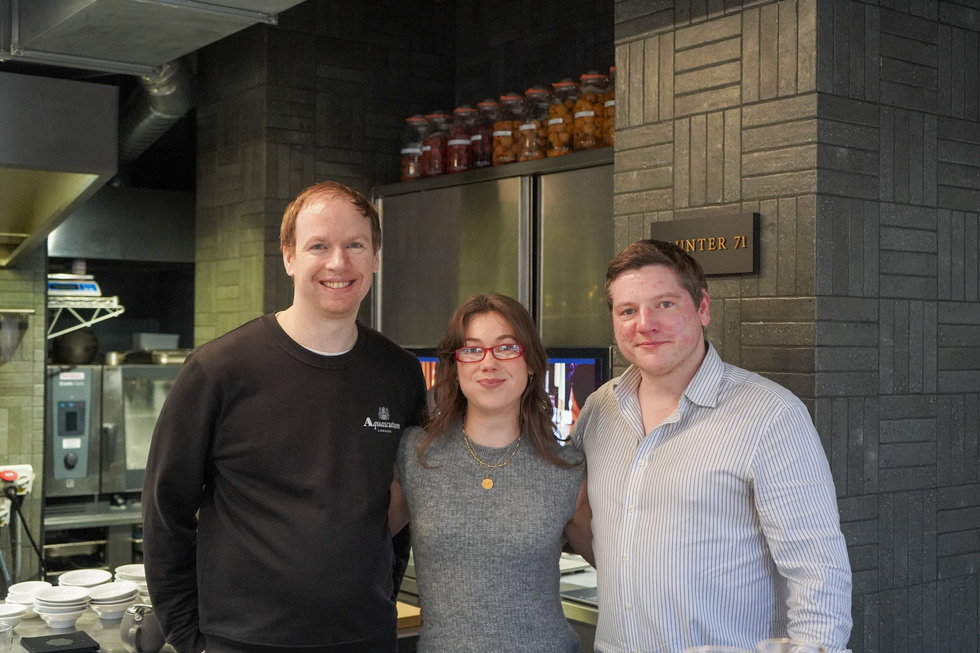
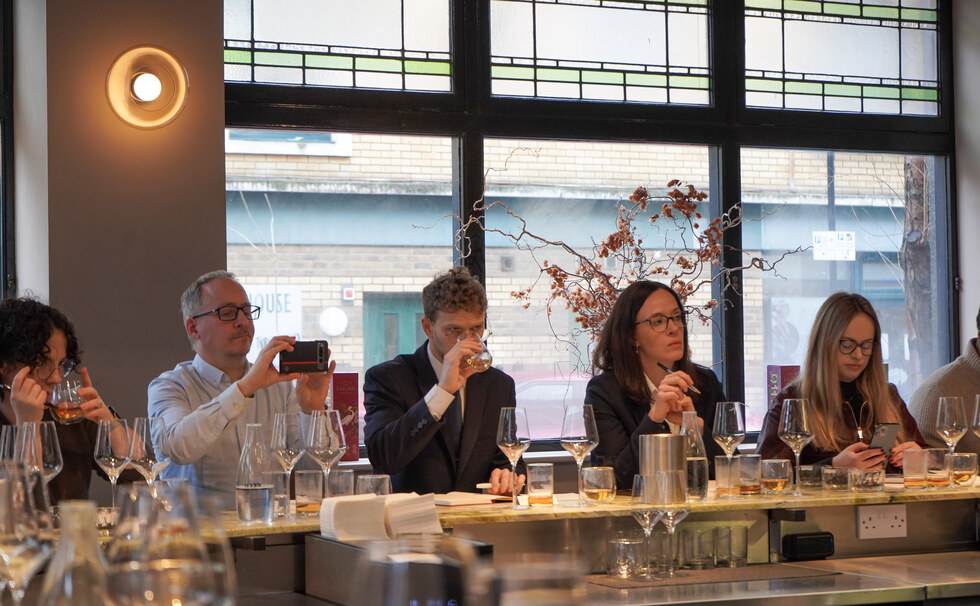
This event was hosted exclusively for members of Sommelier Edit at Counter 71 with Head of Drinks, Harry Cooper. It was co-presented by Charlie Winkworth-Smith, Co Founder and Rachael Turner, Brand Ambassador, Saicho Drinks.