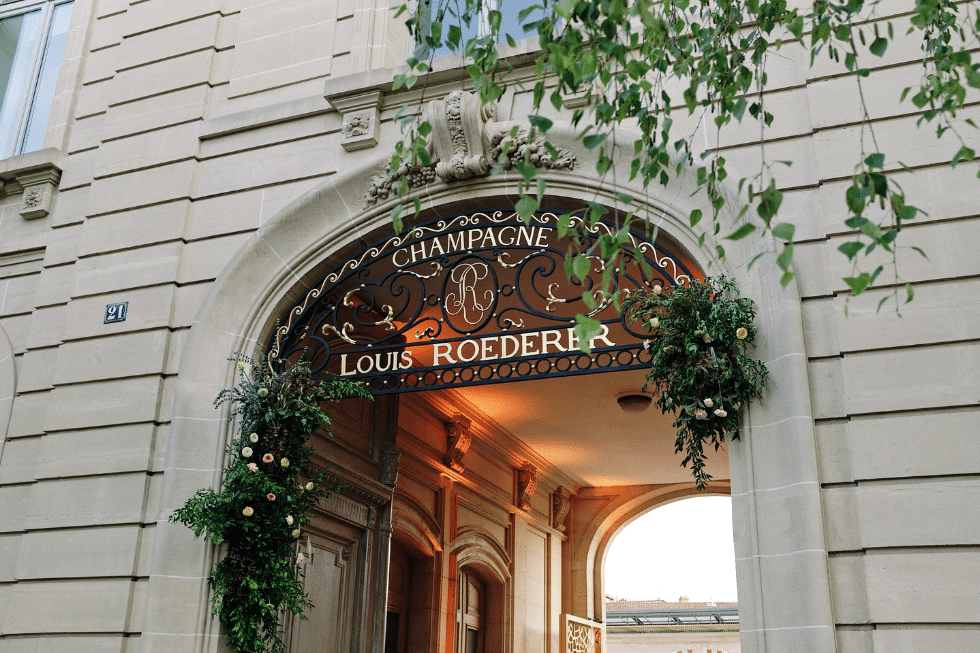
Anniversaries often invite a glance backwards. Yet as Louis Roederer marks its 250th anniversary in 2026, the message emerging from Reims is forward-looking.
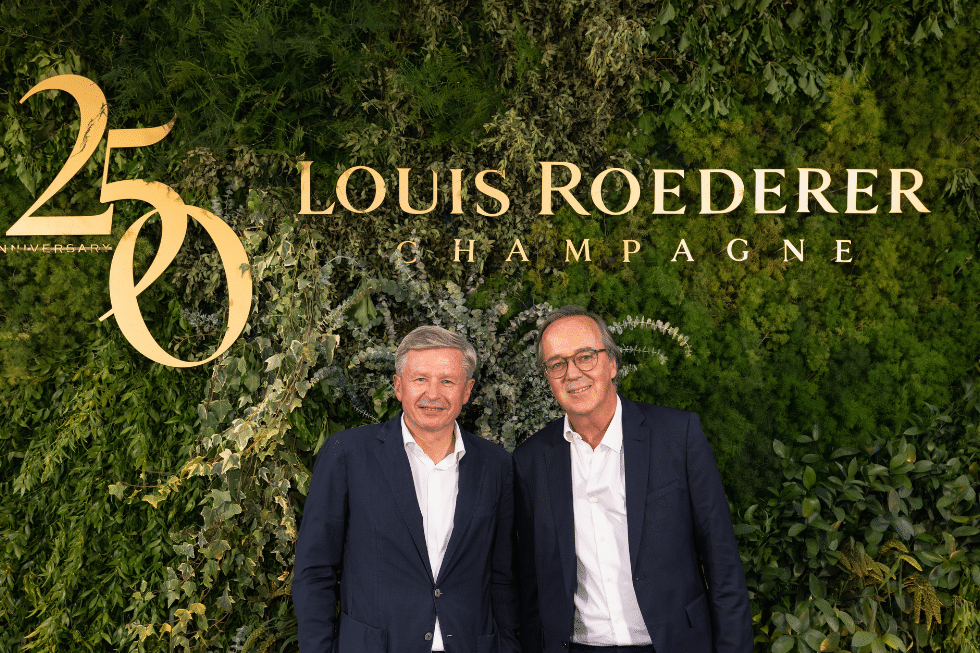
Rather than celebrating heritage for its own sake, CEO Frédéric Rouzaud has used the milestone to articulate a vision rooted in independence, patience and a willingness to evolve. The anniversary coincides with another landmark: the 150th anniversary of Cristal. Together, the occasions could easily have become an exercise in nostalgia.
Instead, Rouzaud has consistently framed them as reminders of responsibility. In his anniversary address, he spoke not of preserving tradition but of honouring the generations who shaped the house through courage, vision and an openness to change.
Time is luxury
For wine professionals, one theme stands above all others: time.
Rouzaud has repeatedly described time as the greatest luxury afforded by family ownership. While many luxury brands operate under the pressure of quarterly expectations, he argues that independence allows Roederer to think in decades rather than years. “Time is dedicated to the vine, to the wine, to observation, to transmission and to creation,” he wrote as part of the anniversary celebrations. That long-term perspective, he suggests, gives the house the freedom to make ambitious decisions without compromising its identity.
This is a philosophy deeply rooted in the Rouzaud family’s stewardship. Rouzaud frequently acknowledges the influence of his father, Jean-Claude Rouzaud, who elevated quality standards across the business and expanded the group’s collection of wine estates while maintaining its fiercely independent culture. Industry observers often credit Jean-Claude with reinforcing Roederer’s reputation for vineyard ownership, quality-driven viticulture and long-term thinking at a time when many Champagne houses were becoming part of larger luxury conglomerates.
Time is dedicated to the vine, to the wine, to observation, to transmission and to creation. Creation is love.
Today, Frédéric Rouzaud appears to be extending that philosophy into a new era, one increasingly defined by climate change. Significantly, the anniversary slogan, “Creation is Love”, carries as much relevance to viticulture as it does to culture or heritage. For Rouzaud, creating a great wine means caring for the land, the vines and the people who work them. It is a statement that links wine quality directly to stewardship.
Cristal is chalk
That connection becomes even clearer when listening to chef de cave Jean-Baptiste Lécaillon, one of Champagne’s most influential voices on viticulture and terroir. If Rouzaud’s anniversary message centres on the luxury of time, Lécaillon’s centres on the importance of living soils.
Speaking during the anniversary year, Lécaillon reflected on nearly four decades at the house and explained that his mission has increasingly shifted towards biodynamic and regenerative farming practices. He has a firm belief that these methods have helped Champagne Louis Roederer get closer to the taste of the past.
His, often quoted, guiding principle is deceptively simple, “The essence of Cristal is chalk.”
For Lécaillon, the future of fine Champagne lies in expressing the region’s chalk soils with greater precision than ever before. As warmer growing seasons bring increased ripeness, intensity and alcohol potential, he argues that soil vitality provides the freshness and balance needed to maintain Champagne’s identity. Healthy soils, deeper root systems and living ecosystems have become essential tools for quality.
This is not merely an environmental narrative. It is fundamentally a quality narrative.
The essence of Champagne Louis Roederer Cristal is chalk.
Lécaillon has often described organic and biodynamic farming as practical responses to viticultural challenges rather than ideological choices. Under his direction, Roederer has significantly expanded organic and biodynamic practices, helping create one of Champagne’s largest organically certified vineyard estates. His belief is that healthier vineyards produce wines that are more transparent, expressive and capable of reflecting place.
Taste the past
One of his more revealing observations is that regenerative farming has helped recover what he calls “the tastes of the past”. “We’re getting closer to the tastes of the past again,” he remarked when discussing biodynamic viticulture.
That perspective is particularly relevant for Australian sommeliers. Across regions such as Tasmania, Yarra Valley, Mornington Peninsula and Adelaide Hills, producers are grappling with many of the same questions facing Champagne: how to retain freshness, preserve site expression and maintain balance in warmer conditions. Lécaillon’s argument is that climate adaptation is not about technology alone. It begins in the vineyard.
His views also extend to the evolution of Champagne itself. Speaking about current trends, Lécaillon noted that climate change is altering the relative strengths of Champagne’s traditional grape varieties. He increasingly values Chardonnay for the freshness, salinity and energy it contributes to blends, particularly as warmer seasons deliver riper Pinot Noir fruit. In his words, Chardonnay brings “the citrus, the salinity, the freshness, the lightness.”
Such comments offer a fascinating glimpse into how one of the region’s most respected winemakers believes Champagne may continue to evolve over coming decades.
Taken together, the perspectives of Rouzaud and Lécaillon reveal the deeper significance of Roederer’s 250th anniversary. This is not a house resting on its reputation. Instead, it is using the moment to reinforce a philosophy that connects independence, sustainability, terroir and quality.
For sommeliers, that may be the most compelling takeaway. While the anniversary celebrates a remarkable history, the real story is about what comes next. Rouzaud talks of time, transmission and creative freedom. Lécaillon talks of chalk, living soils and resilience. Together, they present a vision of Champagne in which the future depends not on preserving unchanged tradition, but on continually adapting in order to protect what matters most: the expression of place.