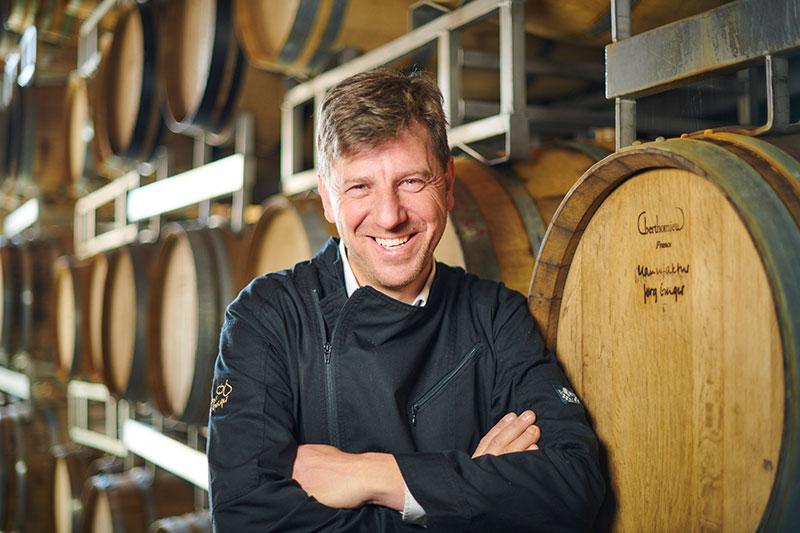
In the soft green bosom of southern Germany – specifically Schlat, a village of just 1,700 residents, so idyllic it could be mistaken for fiction until the siren calls the volunteer fire brigade – stands a man among trees who is quietly reshaping how we understand flavour. Joerg Geiger, once a sprightly chef trained in classical French technique, inherited his family’s inn. But it was the fruit-laden slopes of the Swabian Jura which claimed his devotion. Since the late 1990s, he has been leading a slow but radical transformation – one in which alcohol is not rejected, but rendered unnecessary by aroma, texture, structure and persistence so precise it needs no intoxication to seduce. Yet he is equally acclaimed for his masterful alcoholic creations, proving that true flavour transcends categories.
A Tradition of Innovation
Before alcohol-free was fashionable, Geiger had already moved beyond imitation. He was developing complex, chef-led beverages from heritage orchard fruit. His approach is rooted in both tradition and invention – blending old Swabian methods with a modern culinary mindset. The results, according to his Dutch ambassador, are best summarised as ‘taste plus mouthfeel’: a portfolio of alcohol-free alternatives, each crafted for gastronomic depth.
These are not copies but originals – mineral, botanical, herbal, sometimes startling, always precise. Some are bone-dry, others evoke wildflowers and sun-warmed orchard fruit, but all are built on structure, acidity, grip, bitterness and length. They are recipes, not reductions. Tasting them is not a soft drink experience – it is a new register of palate: accented with rhubarb, redcurrants, gooseberries, Aronia berries, and cherries – not the polished scarlet kind but bronze-tinged, imperfect, and entirely local – as well as exotic teas, roasted coffee, and rare peppers. Some are served over ice. Others are decanted like a wine of provenance. All are crafted with the same devotion to terroir and technique.
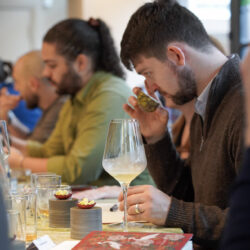
To understand this properly, one must visit. Which is exactly what a delegation of UK-based sommeliers, importers and communicators did: Camille Vidal (La Maison Wellness), Christopher Dormer and Emmanuel Byilingiro (Vintage Roots), Elizabeth Hawthornthwaite (Elizabeth & Wine), John Linton and Elliott Vale (Grape Passions), Jon Gay (Snape Maltings), Laura Willoughby MBE and Jussi Tolvi (Club Soda), and broadcaster Nigel Barden.
Terroir in Translation
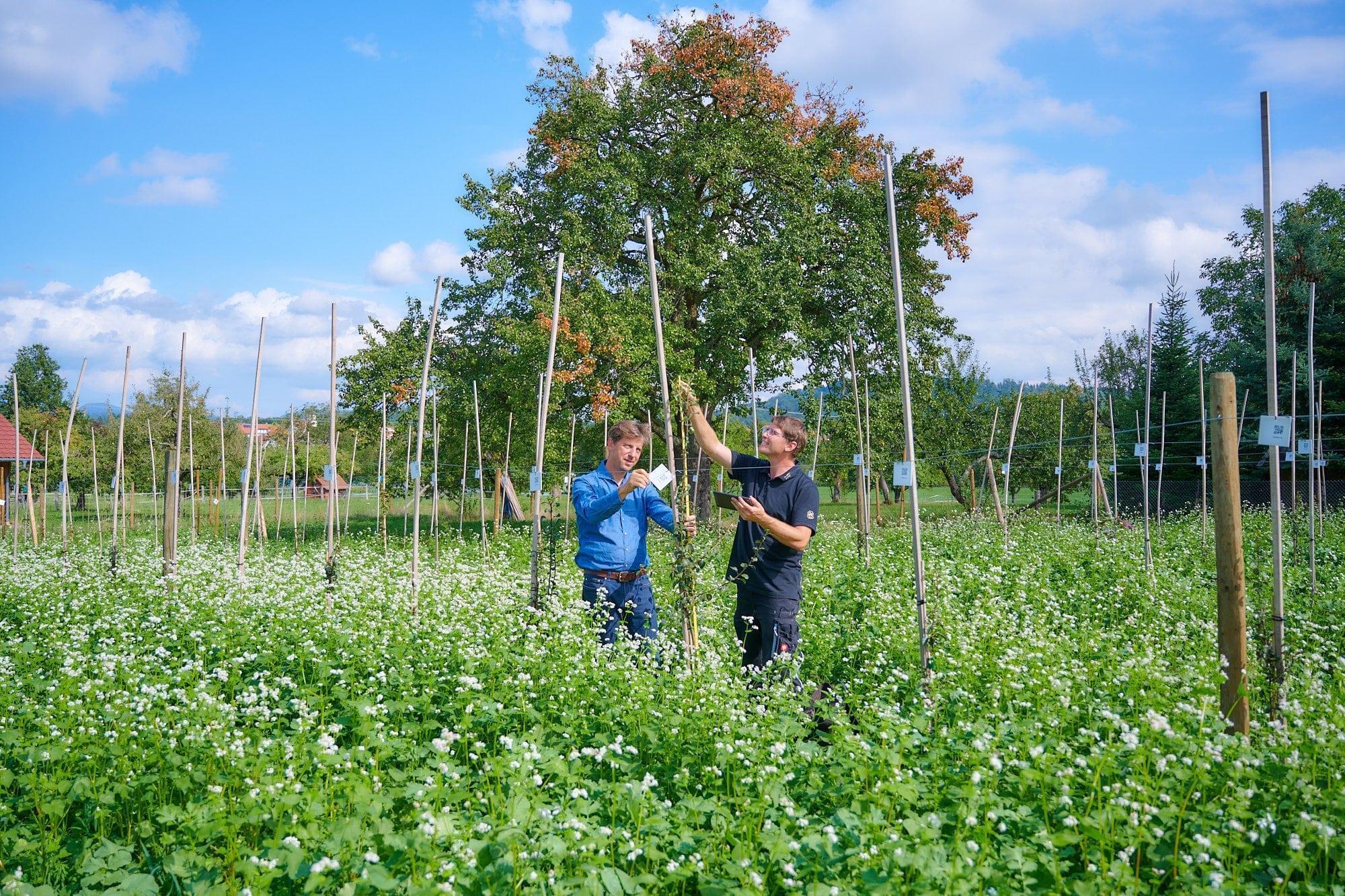
We arrived at a borage-fringed orchard teeming with butterflies and birdsong. The thunder in the distance was real. So was the scent of clover and meadowsweet, and the presence of shorn lambs sheltering under the shade of old fruit trees. Here, Geiger curates by instinct and by science. Trees, some over 200 years old, are left tall and dignified. Pears fall when they are ready. Pruning is minimal – and only when necessary. The land is a managed wilderness, guided by regenerative principles: compost, mulch, mycorrhizal fungi, and a total absence of chemicals. ‘Investing in soil is investing in future,’ says Geiger. ‘A landscape which doesn’t need intervention – in the microbiome.’
Geiger believes terroir is not just soil and climate, but botany, memory and time.
He works with 390 family growers, all regularly assessed and located within 50 kilometres of Schlat. He pays top prices, encouraging soil enrichment, cover cropping and organic mulch. ‘We as humans reap the micronutrients from the resulting fruit,’ he explains. ‘It’s a better way to take them than in pill form.’
Schlat has long been known for its pears. One variety – the Grüne Jagdbirne, or green hunting pear – is so bitter you might discard it. But Geiger stopped beneath such a tree to explain the ripening process he unearthed in old texts: ‘It was described to crush it and wait for several days, then begin to press – leading to polymerisation due to contact with oxygen.’ His team waits one day to press, producing ripe, elegant tannins. The tree’s owner beamed with pride that Geiger recognised its worth.
Elsewhere, he pointed to a field where vineyards once stood in the sixteenth century, until climate change made pears the wiser crop. He traces such lineage and terroir like a scholar. ‘I want to make growers of old trees – heritage varieties – proud of the roots of those trees reaching back their grandfathers,’ he says.
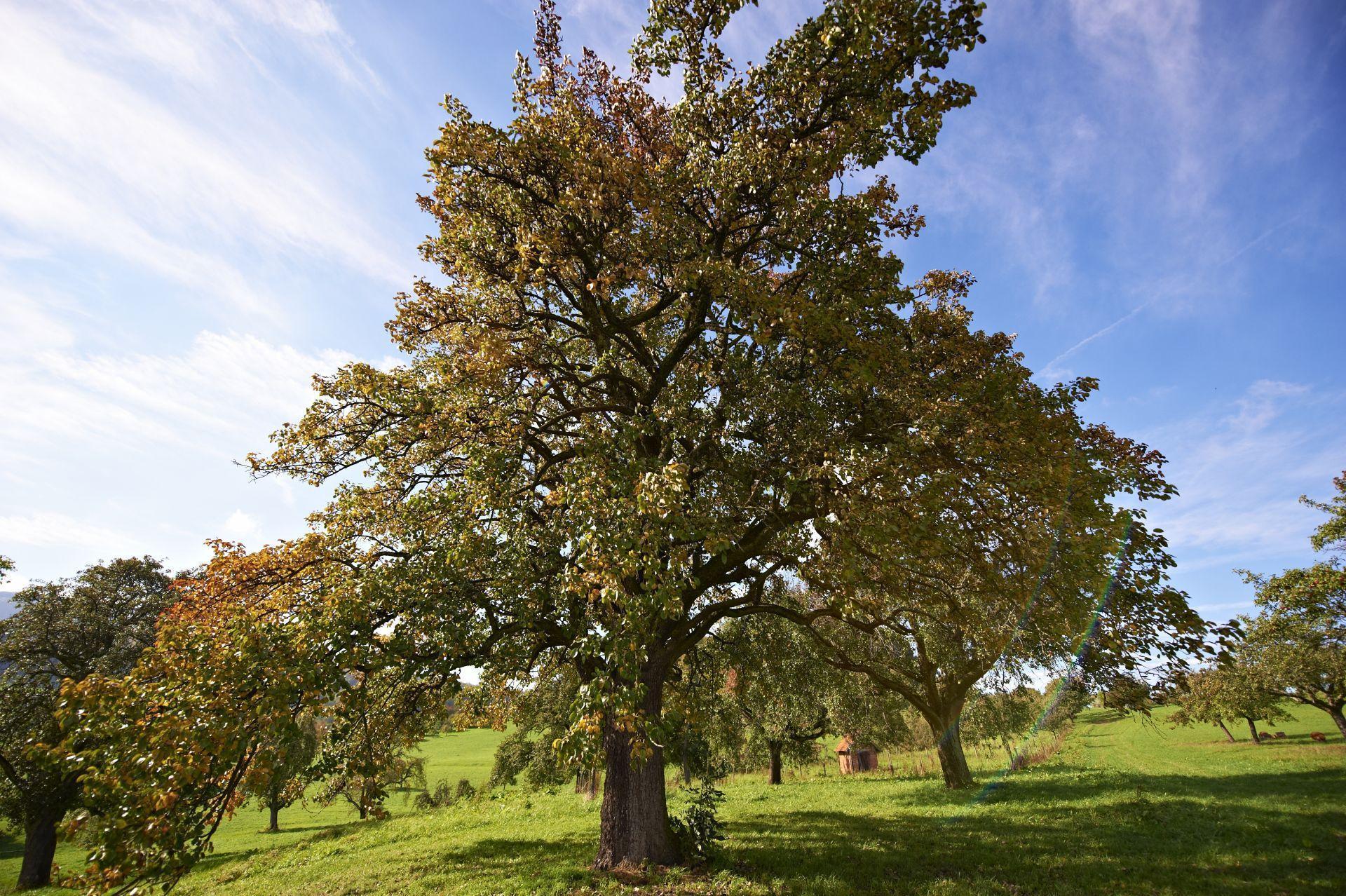
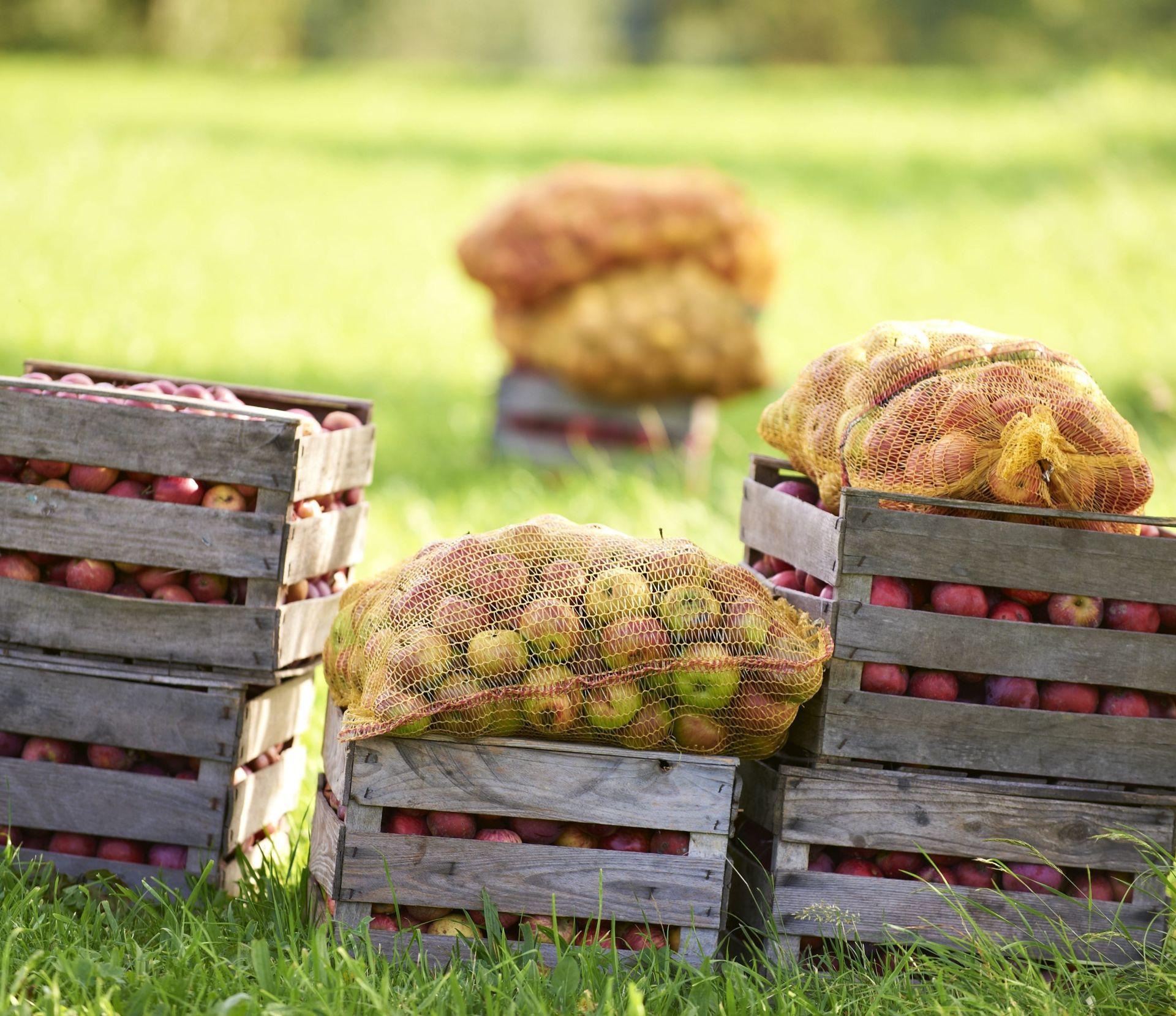
The trees, Geiger insists, must not be rushed. ‘They don’t fruit every year – they invest some years in their roots to survive hot days.’
Ugly fruit, he notes, has ‘inner values’. When the soil is good, ‘it smells of carrots,’ he says, lifting a spadeful. Dying apple trees are left standing as shelter for birds. Even in the town, Geiger guides us past individual trees like old friends.
In underperforming soils, he applies basalt to alter conductivity – and has raised alien-looking basalt pillars in the fields as part of a long-term experiment. ‘Humus is the battery for the solar power of the sun,’ he says. ‘Come back in fifteen years to see if we are sure it works.’
The Factory and the Family
The factory is as astonishing as the orchard. Solar-powered and scented with ferment and fruit, it feels more kitchen than winery. ‘A chef’s kitchen,’ one guest remarked. Inside are drawers of dried herbs, teas infused at multiple temperatures, hydrosols, barrels of cherries, Douglas fir, sea buckthorn, even distillations of crushed stone. This is a place of relentless tasting and refinement. ‘When I started again in 1997, it wasn’t clear what would happen – thank you for being here,’ says Geiger.
His day begins at 7am and includes constant tasting – a monastic discipline. His cellar master is Martin Recher, his former sous-chef, who joined during COVID. ‘He is the scientist,’ says Geiger. ‘I am the creative mind.’ One of the earliest trial bottlings was disgorged under ice in the dining room of the family inn. Geiger added the dosage in real time – and, too focused on a guest in white, soaked her completely. She laughed.
Sophia, Geiger’s daughter, also works in product development while studying international business management. As a child, she lived above the dining room but wasn’t allowed to run upstairs, as she recalls, ‘because I would cause dust to fall from the ceiling onto diners!’
The food chosen during our visit echoed the mission. At lunch beneath the very trees used in Geiger’s traditional method trials with the Champagner Bratbirne – a pear first mentioned in a 1797 pomological text he cherishes – we ate savoury carrot and pumpkin cake, set with apple PriSecco jelly, paired with Cuvée No. 8: gooseberry and unripe apple. It was one of the best matches of the trip. Another dinner saw burrata with pine nuts and Blanc de Blancs (scented like lime marmalade), a fish stew paired with 33° Pinot Meunier and cider pear, and a crystalline, caraway-scented hydrosol – AECHT [KIMMEL] – to close.
The Future Below Zero
Geiger also owns Château Lamothe in the Côtes de Bourg, acquired on 1st April 2024. The dealcoholising, however, takes place in Schlat, where each component is reimagined with orchard logic. He also works with organic grapegrowers from the Rhine to the Rhône and the Languedoc.
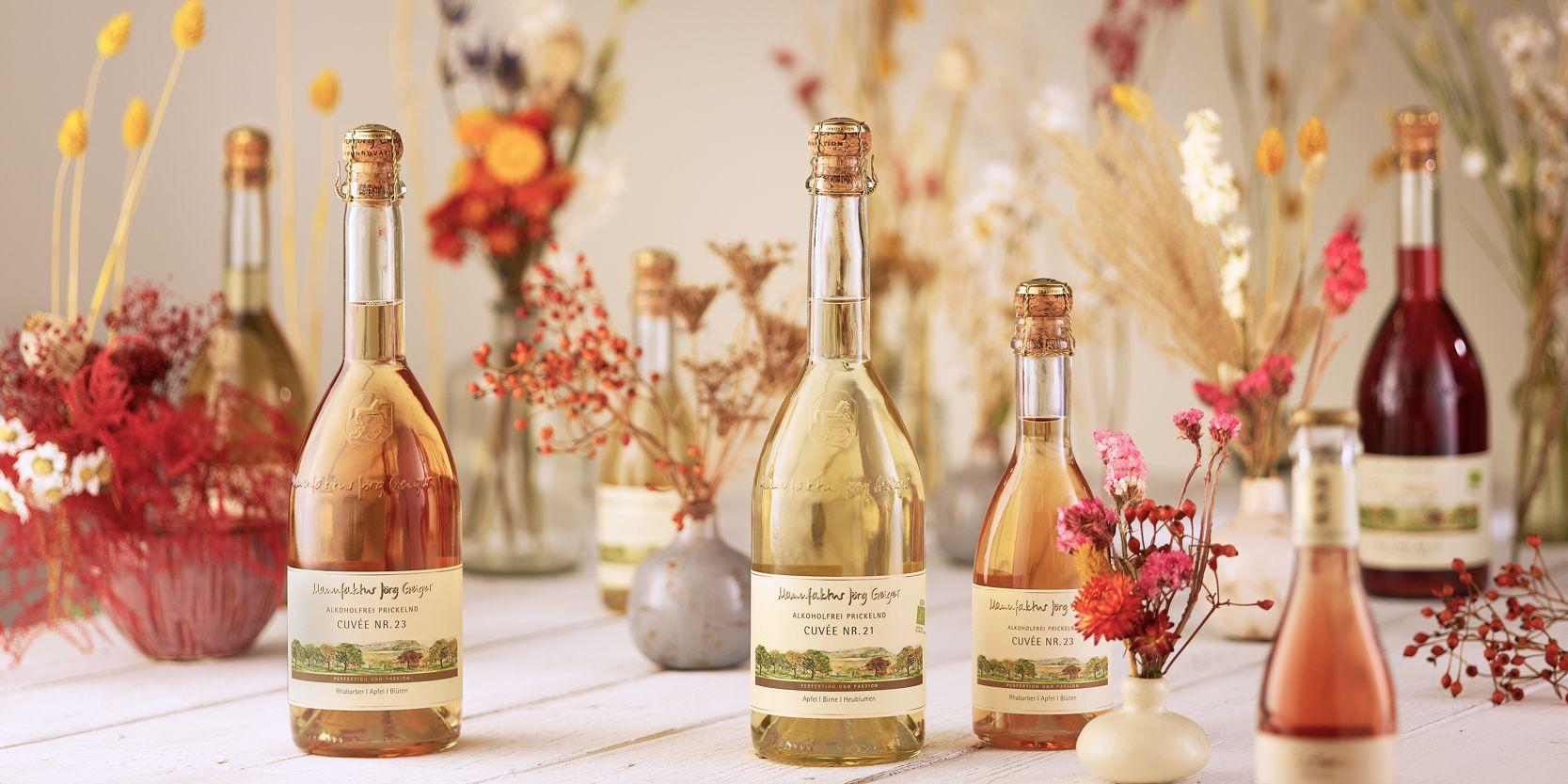
These are drinks which don’t just fill a glass – they fill a silence. The ViSecco range includes a still Pinot Meunier; a collage of apples, pears and meadow blossoms; Teasecco, sharpened with Darjeeling; the Moscato d’Asti-like Cuvée No. 23, scented with tart rhubarb, rose petals and sorrel; and Cuvée No. 36 – a still red of Grenache, blackcurrant, blackberry and plum, best served cool, its natural sediment thrown like a signature. Also available in the UK are the mandarin, gooseberry and hazelnut-tinged Blanc de Blancs, and AECHT [KIMMEL], a crystalline, pre-batched hydrosol cocktail. Each is made from 100% juice – no water, no dilution – layered, structured, and built with food in mind.
At a masterclass held in the former dining room, titled Food Pairing Below 0, sommelier Melanie Weber summed up the moment: ‘Sommeliers are stepping out of their comfort zone’ – a shift which may, as Laura Willoughby noted, help counter ‘the perception that ordering a drink without alcohol can be problematic.’
Geiger’s journey is not merely a product line. It is a worldview: slow-thinking, soil-minded, built on the conviction that flavour – not alcohol – is the soul of the experience. ‘We are only at the beginning of the alcohol-free journey for restaurants,’ he says. But Joerg Geiger is already somewhere in the future, glass in hand, waiting for the rest of us to catch up.