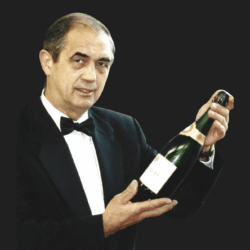
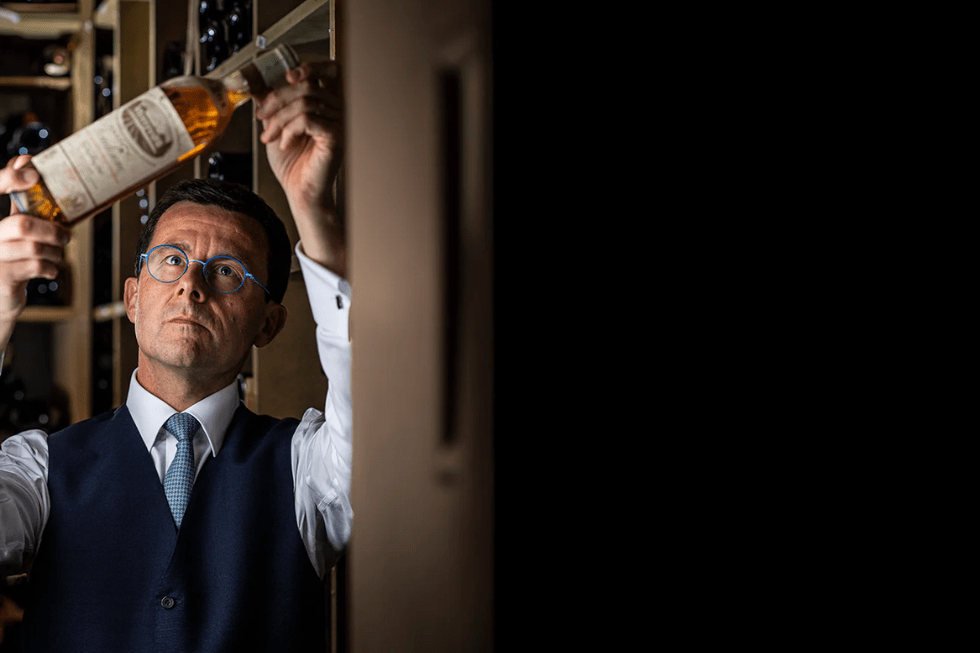
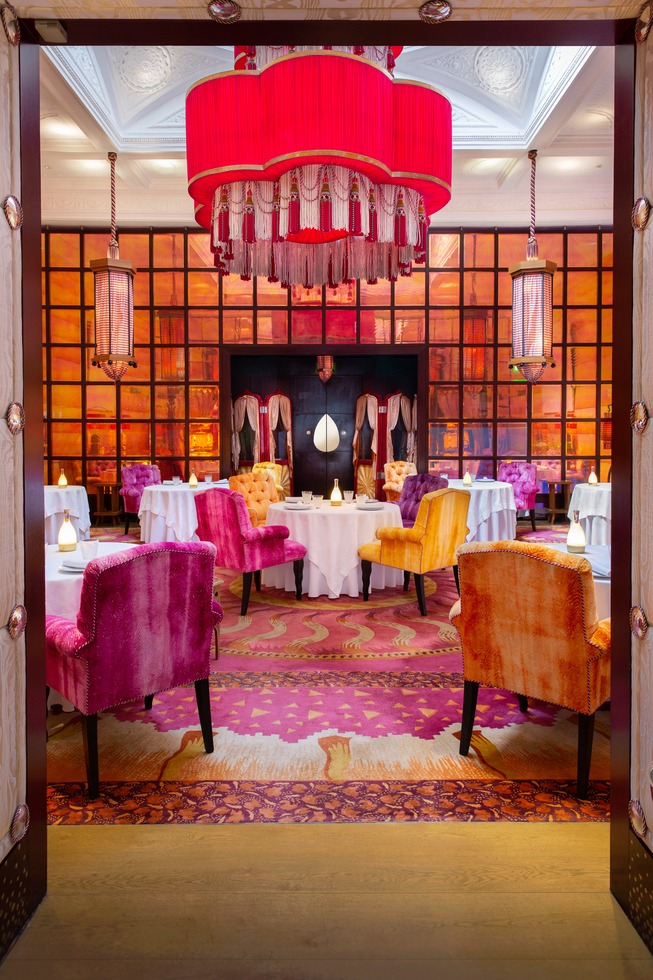
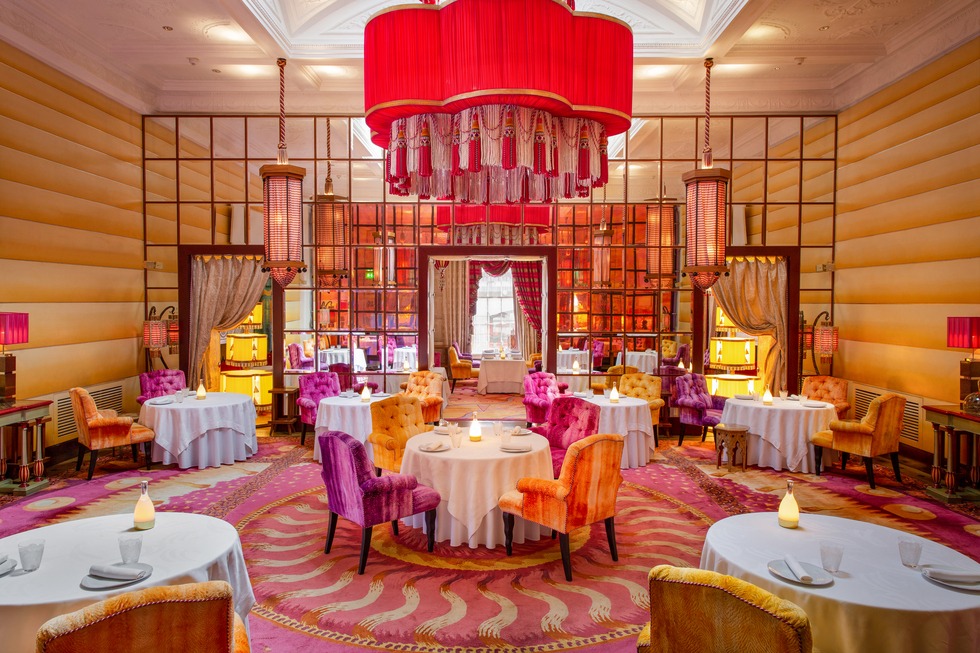
Fred Brugues, Wine Director, is celebrating 24 years at Sketch this year, having worked at the iconic Mayfair venue since it opened. Sketch has five bars and restaurants, including a three-Michelin-starred restaurant, The Lecture Room & Library.
“I didn’t really like school,” Brugues tells me, “but I loved drawing, was very good at mathematics, and I wanted to be an architect.” Growing up in a small town in the southwest of France, that would have meant a move to Bordeaux, which his mother deemed him too young for, so Brugues turned instead to hospitality at his aunt’s suggestion, “and I hated it”, panicking as soon as he walked onto the floor. Despite a love for food, it took only prepping a dish for an entire morning and watching a customer eat it in five minutes for him to decide he would never be a chef.
His grandfather, a great food and wine lover, would often tease Brugues about how he spat out his first glass of wine, a Mouton Rothschild 1929. Brugues says “I didn’t like wine really” but he was close to his grandfather, visiting his first wineries with him and getting to understand his cellar.
Persistence pays off
When he went to Libourne to study sommellerie, Brugues lived next to Château Haut-Brion. Tasked with finding his own internship, Brugues turned to his neighbouring estate and despite being told day after day that the estate didn’t take interns, he resolved to knock on the door every day. One day, Jean-Bernard Delmas came out enraged at the daily intrusion, but when Brugues explained he had no income and that there was no government grant for sommellerie and he was looking for an internship, Delmas liked the story. Brugues became the first intern at Haut-Brion, working in the chai for a year and then in the vineyard.
His move to London was born from necessity. In 1995, Brugues was freshly out of school and struggling to find a job as France slid into recession. It was his barber who suggested he might have more luck abroad, putting him in touch with her brother-in-law, Yves Sauboua, President of the Sommelier Club of Great Britain. He had a job for Brugues at a private club in Knightsbridge, but it meant waiting a few months. In the meantime, an opportunity came up to work for Marco Pierre White, who had just gained his third Michelin star.
Brugues worked for White for five years, moving from The Restaurant to open The Oak Room and then Mirabelle. “I really loved my time there, working for Marco, especially during those years where we were opening amazing wines,” he says. He left to open High Holborn, which quickly gained a Michelin star. A stint at China House, cut short because of the drop in footfall after 9/11, led to a headhunter seeking him out for Sketch, a similar multi-restaurant concept.
London Calling
At the time, Brugues had been planning to go back to France to open a bistro in Bordeaux based around Napa wines, and “had no idea who Pierre Gagnaire was, I had no idea where Conduit Street was,” but after a call with his mentor Claude Douart, he was persuaded it could be an exciting opportunity. Within months, he had joined the team and has been there ever since.
Speaking of his mentors, Brugues credits Douart, with whom he worked at The Restaurant Marco Pierre White, “for the classicism of wine”. White himself was equally instrumental in Brugues’ wine education, opening wines like Cheval Blanc, Ausone, Lafite, Mouton, La Tâche, Jayer: “we were very, very lucky back then,” Brugues says. He admits working in a three-star restaurant was a learning curve, but a true passion for service only started when Brugues worked with Christophe Capon at Mirabelle. “I was in love with the wine but not with the floor,” he explains, “but now I can’t get away, because I love it, it’s part of me now. And I owe that to Christophe”.
Brugues reflects that some of the greatest advice he ever received came from Pierre Gagnaire, Master Chef at Sketch. When the project opened, it had gone over budget and there was “not a penny left” to buy wine. It was clear Brugues couldn’t curate a 100 or 200 bin wine list. Gagnaire told him to make a wine list “for them, not for you” and he learnt to listen to the guests before himself.
Legacy and Legend
When he looks at the wine department now, he is very proud. He is proudest of the sommeliers he has trained over the years, and touched that so many remain in contact. Brugues has built a legacy programme, very aware that price increases mean younger sommeliers suffer from not being able to taste wines he was lucky enough to enjoy as house wines at White’s restaurants. He has always refused to buy simply for the sake of it, or to list wines at the wrong prices.
Wine wish
With such experience of trying so many wines, what would Brugues choose if granted a wish to try anything? His roots remain firmly in Bordeaux, although as he puts it, “white is my thing”. He would love to retry Pavillon Blanc du Château Margaux 1926, remarking how “arrogantly young” it was when he tasted it after nearly a hundred years in bottle.
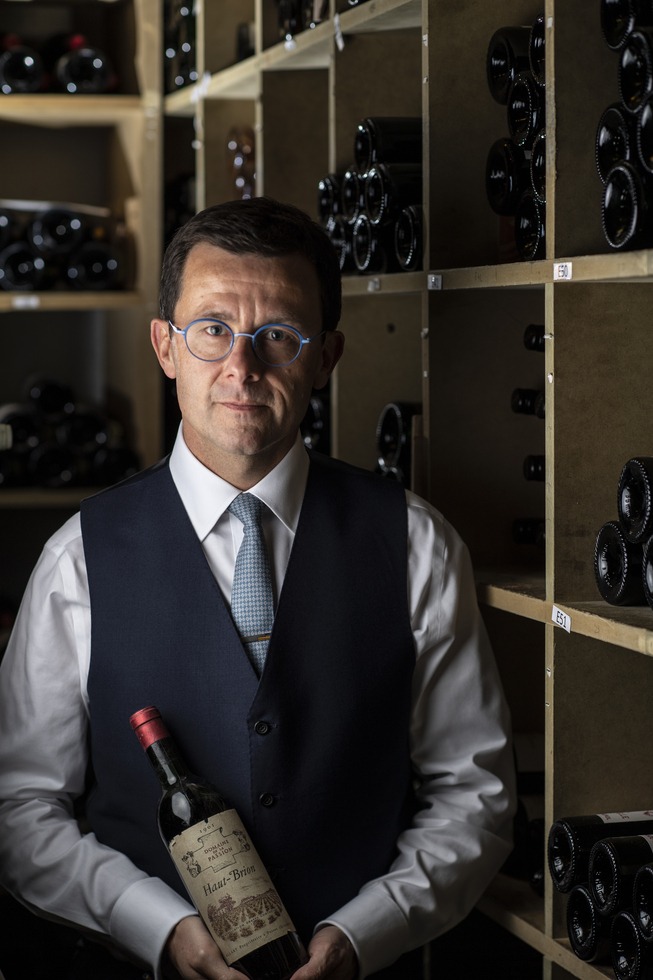
He would also love to try “two unicorn wines”: Domaine de La Passion Haut-Brion 1959, no longer made, from a single plot within Haut-Brion, and Château Carbonnieux Blanc 1928. “The perfect meal to me would be Carbonnieux Blanc 1928, Passion Haut-Brion 1959, Yquem 1847…!”
Based in the three-starred Lecture Room & Library at Sketch, and overseeing the wine programme for the whole venue, Brugues is interested in how to keep new generations interested in wine, even going door to door in lockdown to chat to people about their taste preferences. He says “If I could leave Sketch one day having started something where I know it helps wine not to lose market share, then I think I will have made it. A bit like the legacy programme, it’s not about me opening the bottles.”
Brugues has come a long way since that first glass of Mouton Rothschild, but his philosophy remains disarmingly simple: “Wine is enjoyment… wine is part of life.”