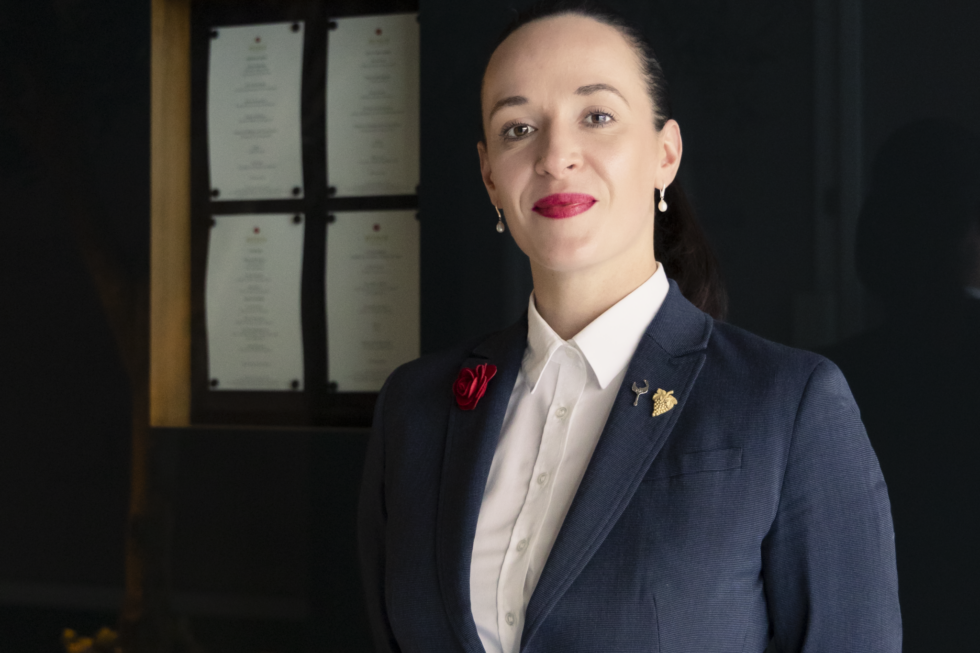
At Petrus in London, Milena de Waele is quietly reshaping expectations of what wine service can and perhaps should look like today.
In an era where diners are increasingly informed yet less bound by tradition, de Waele sees a shift not toward informality alone, but toward something more meaningful: connection. “Wine service today is becoming more relaxed, inclusive, and experience-driven,” she explains. “Guests are less interested in formality and more interested in connection the stories behind the wine, sustainability, and discovering something new.”
This evolution reflects a broader recalibration within hospitality. Where once the sommelier might have been perceived as a gatekeeper of knowledge, today’s role demands a more intuitive, guest-focused approach. “Technology and more casual service styles are reshaping the traditional sommelier role into something more approachable,” de Waele notes, pointing to the growing expectation that expertise should feel accessible rather than intimidating.
A shift in taste
If the mechanics of service are changing, so are the wines themselves. De Waele identifies several clear trends shaping the modern wine list: “There’s a rise in organic and biodynamic wines, lower-alcohol styles, and a growing interest in lesser-known regions.” Equally significant is the expansion of by-the-glass offerings, which is redefining how guests engage with wine during a meal. “There’s a strong movement toward diversity by the glass,” she says. “It allows guests to explore without committing to a full bottle.”
This flexibility aligns with a more exploratory mindset among diners, one that prioritises discovery over label recognition. It is also, crucially, reshaping the economics of wine drinking in restaurants.
Redefining value
In the current climate, the idea of “value” has become more nuanced. According to de Waele, guests are not necessarily spending less, but they are spending more thoughtfully. “It’s a mix of value and quality, but value has evolved,” she says. “Guests are still willing to spend, but they want that spend to feel justified, whether through quality, uniqueness, or experience.”
This shift has led to increased demand for what she describes as “hidden gems”: wines that overdeliver relative to their price, rather than relying on the prestige of established names. “People are trading up less frequently,” she adds, “but expecting more when they do.” For sommeliers, this presents both a challenge and an opportunity to curate lists that balance recognisable benchmarks with compelling alternatives, and to articulate that value in a way that resonates.
Professionalism and curiosity
De Waele’s own path into wine reflects the multidimensional nature of the profession. “What drew me in was the combination of storytelling, sensory experience, and human connection,” she says. “Wine sits at the intersection of culture, geography, and craftsmanship.”
It is this intersection that continues to sustain her enthusiasm. Beyond the technical knowledge required, she emphasises the importance of interpretation and translating a wine’s origin and intent into something meaningful at the table. That interpretive role is also what makes the work so rewarding. “The interaction with guests is the highlight,” she says. “Helping someone discover a wine they didn’t expect to love, or enhancing a meal through the right pairing, is incredibly satisfying.”
Even in a profession often associated with rigor and study, de Waele highlights its dynamism. “You never stop learning,” she says. “That’s what keeps it exciting.”
For those entering the trade, her advice is both pragmatic and philosophical. “Stay curious and be patient,” she says. “Taste as much as you can, but do it thoughtfully compare, take notes, and ask questions.” However, she is quick to stress that technical knowledge alone is not enough. “Hospitality and communication are just as important as theory,” she notes. “You can know everything about a wine, but if you can’t connect with a guest, it won’t translate.”
Humility, too, remains essential. “Wine is vast,” she says, “and there’s always more to learn.”
The art of recommendation
At the heart of de Waele’s approach is a simple but often overlooked principle: the guest comes first. “When recommending wines, I always start with the guest. What they like, the occasion, and what they’re eating,” she explains.
Her goal is not merely to satisfy expectations, but to gently expand them. “I aim to find something that fits their preferences while introducing them to something slightly unexpected,” she says. “That’s what turns it into a memorable experience rather than just a safe choice.”
This balance between comfort and discovery is increasingly central to the sommelier’s craft. Despite the diversity of wines she encounters professionally, de Waele’s personal tastes remain refreshingly uncomplicated. “I enjoy a wide range of styles depending on the moment,” she says, “but I have a real soft spot for sparkling wine.”
Her enthusiasm is immediate and unqualified: “I’ll happily drink it any time of day, in any weather. There’s something about its freshness, versatility, and celebratory feel that makes it special whether it’s paired with food or enjoyed on its own.”
The future of service
Taken together, de Waele’s perspective paints a picture of a profession in transition — one that is moving away from rigid tradition and toward a more fluid, guest-centric model. What remains constant, however, is the essence of hospitality: the ability to create moments that linger. Whether through a perfectly judged pairing, an unexpected discovery, or simply a well-timed conversation, the modern sommelier’s role is less about performance and more about presence.
As de Waele puts it, the goal is simple: to make wine meaningful.