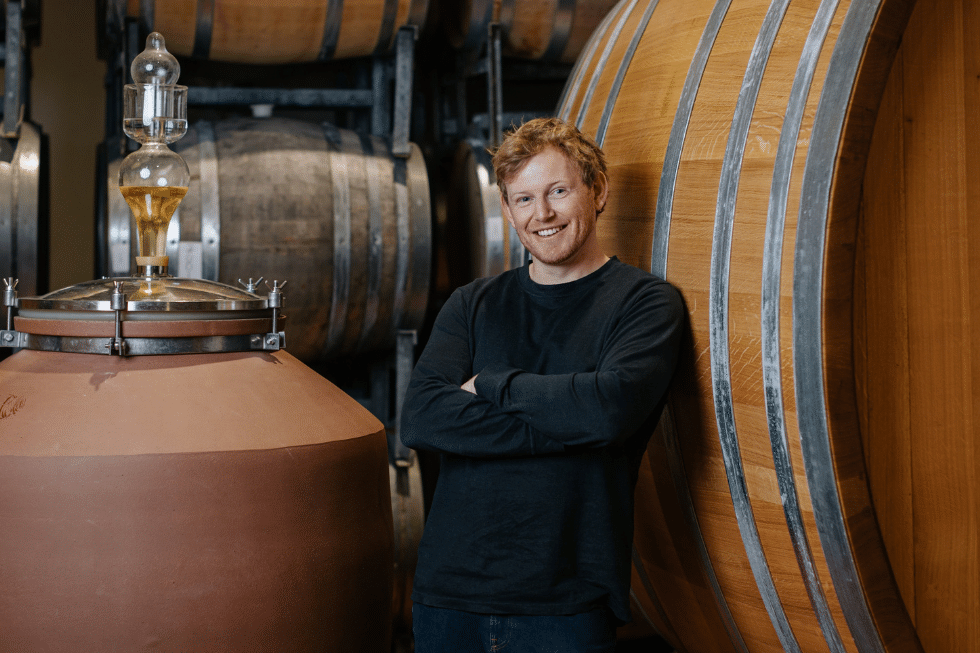
To understand how Craggy Range translates this extreme site into the glass, we sat down with Ben Tombs, winemaker, to deconstruct the physiological, structural, and service-level nuances of Te Muna.
Nestled in the cooler, windswept upper reaches of Martinborough, Craggy Range’s Te Muna vineyard sits at a slightly higher elevation than the lower Martinborough Terrace. This subtle shift in geography creates a dramatic microclimate, one that defines the tension, texture, and longevity of their benchmark Pinot Noir.
The defining hallmark of Te Muna is time. Thanks to elevated topography and constant breeze, the vineyard enjoys an exceptionally long, slow ripening window—frequently pushing past 130 days from flowering to harvest. Ben Tombs explains, “With Te Muna slightly higher in elevation, the growing season is longer. We can push ripeness quite far.”
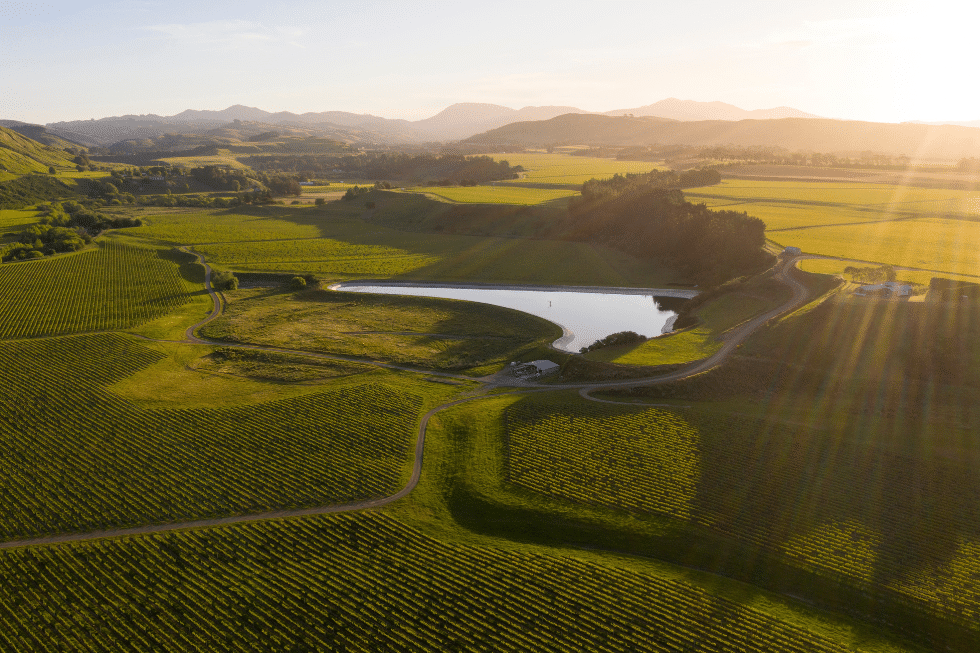
He continues, “Temperatures are mild, with maximums barely exceeding 30 degrees in a season. With longer hang time and mild climate, acidity is retained without the need to pick early, so phenolic ripeness can be achieved. Flavours alongside this barely move to boozy/jammy characters and can stay quite floral and red/blue fruited.”
“The combination of loamy soils interspersed with free draining gravels provide a great combination, especially in periods of prolonged dryness. Te Muna has heavy winds, leading to thick skins and potential for a lot of phenolic material in the berries.
For the sommelier, this translates into a wine of immense aromatic purity; red and blue fruit laced with delicate florals, backed by a crisp, natural acidity that never feels forced or underripe.
Te Muna’s unique soil matrix pairs moisture-retentive loam with free-draining gravels. This allows the vines to survive prolonged dry spells without shutting down, maintaining crucial momentum late into the season. Combined with unrelenting winds, the vines respond by growing thicker skins, packing the berries with phenolic potential. Tombs says, “The combination of loamy soils (good water holding capacity) interspersed with free draining gravels provide a great combination, especially in periods of prolonged dryness.” He elaborates, “Te Muna has heavy winds, leading to thick skins and potential for a lot of phenolic material in the berries. The tannin fingerprint for me is there’s an amplitude of structure and phenolic material in the wine, but it’s ripe, long and velvety.”
Gentle hands for high-potential fruit
Given the sheer volume of skin-to-juice ratio and natural phenolic density coming off the vineyard, the cellar team exercises extreme restraint. Heavy cap management is actively avoided to prevent the extraction of harsh seed tannins or masking Te Muna’s innate floral lifting. For Tombs, “there’s an abundance of structural potential in the wines. Heavy cap management regimes are not needed to extract a lot of material from the fruit,” he explains.
Extraction is therefore light, mainly short pump overs with te Muna. “Often many cuvées only need one movement a day, or every second day,” he says, “There’s a good time on skins in the fermenter to allow for less overtly primary fruit characters and more interesting savoury/earthy characters to arise.”
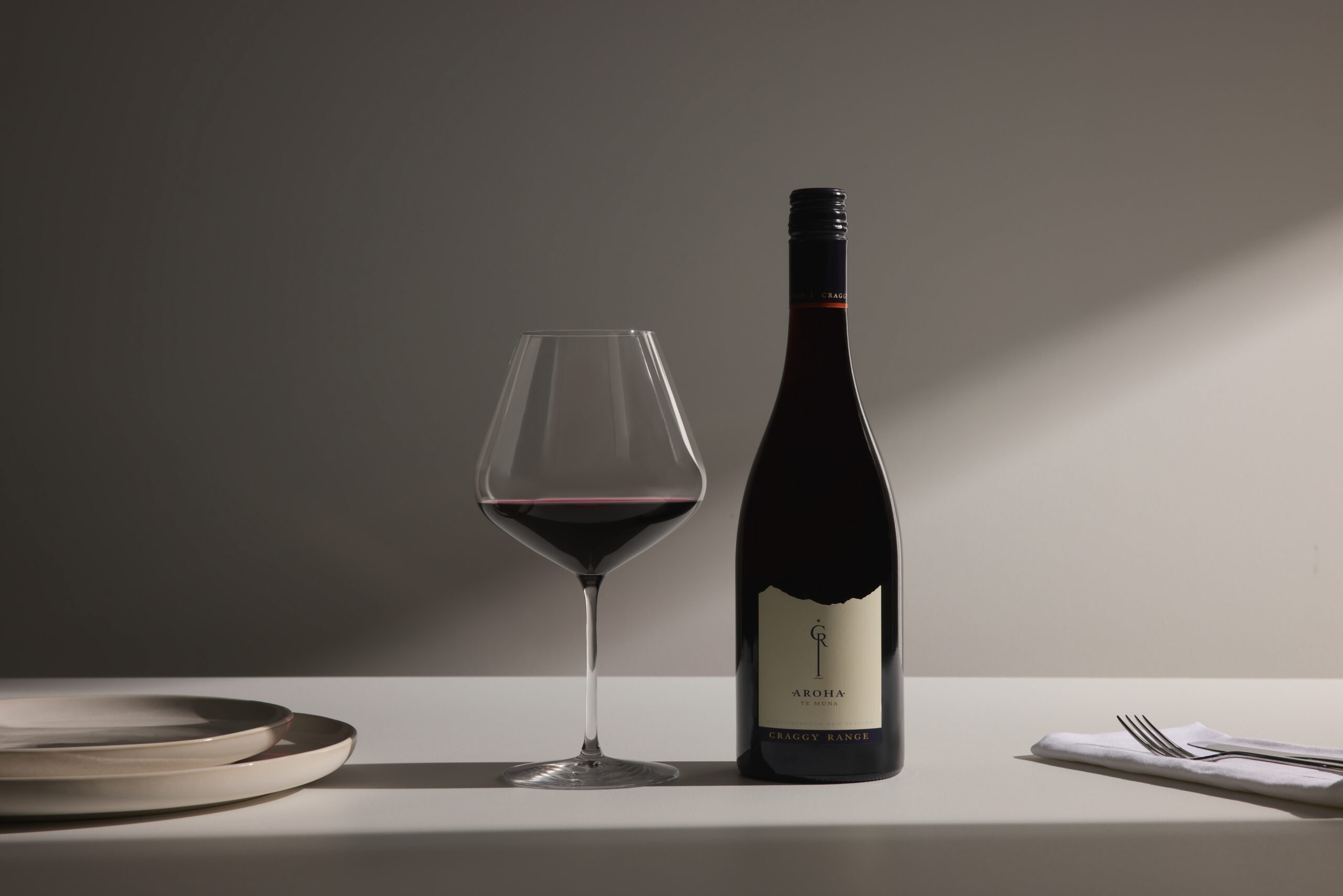
Building the final blend requires balancing immediate plushness on the floor with age-worthy spine for the cellar. Tombs relies on a thoughtful interplay between Dijon clones and the famed Abel clone (often associated with historic Burgundian cuttings in New Zealand). He believes that the Abel clone has a lot of power and presence that brings a lot of energy and length to the wine. For him, “This gives great cellaring potential and can balance the Dijon clones, which are often more chocolate, plushy, bramble and have an exotic appeal. Abel clone really shines on the warmer vintages; Dijon clones are more preferred on most other vintages.”
Whole-cluster integration
While whole-bunch fermentations are popular in modern Pinot Noir production, Craggy Range uses the technique sparingly and intentionally. Primarily as a cooling mechanism in warmer years rather than a stylistic stamp.
Te Muna wines have great cellaring potential and can balance the Dijon clones, which are often more chocolate, plushy, bramble and have an exotic appeal. Abel clone really shines on the warmer vintages; Dijon clones are more preferred on most other vintages.
The shift toward incorporating larger oak cuvées and foudres has dialed back oak-derived flavor impacts, allowing pure fruit and earth to shine through earlier. However, sommelier teams should take note of service dynamics. “Potentially, the wines aged in larger format can be wound quite tightly and often need some more time to breathe in decanter. Less new oak derived flavours and impact allow more of the fruit to show earlier though,” explains Tombs.