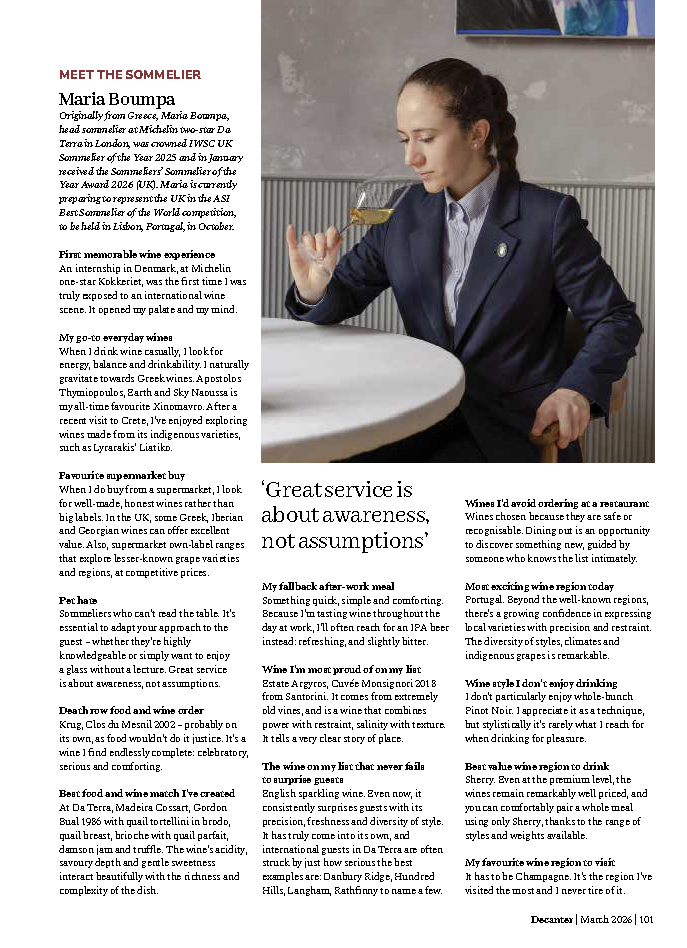
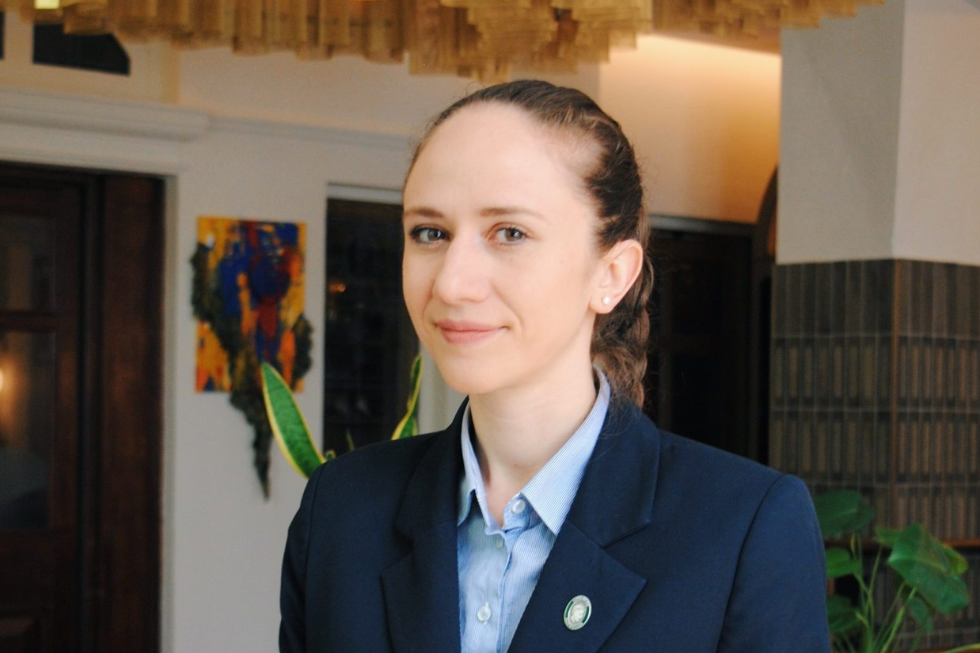
Meet the Sommelier. Sommeliers’ Sommelier 2026 Maria Boumpa talks about what it means to be a top sommelier from pet hates to memorable wine experiences.
Originally from Greece, Maria Boumpa, head sommelier at Michelin two-star Da Terra in London, has built her career in the UK at the highest level of fine dining. She was crowned IWSC UK Sommelier of the Year 2025 and in January received the Sommeliers’ Sommelier of the Year Award 2026 (UK); she has also achieved top distinctions across major international wine qualifications. Maria is currently preparing to represent the UK in the ASI Best Sommelier of the World competition, in Lisbon, Portugal, in October.
First memorable wine experience
One of my most formative wine experiences was an internship in Denmark, in Michelin one-star Kokkeriet. It was the first time I was truly exposed to an international wine scene – not just classic regions, but a wide spectrum of styles, philosophies and producers from around the world. That environment opened my palate and my mind, and it made me realise how diverse the wine world really is.
My go-to everyday wines
When I drink wine casually, I look for energy, balance and drinkability. I naturally gravitate towards Greek wines. Apostolos Thymiopoulos, Earth and Sky Naoussa is my all-time favourite Xinomavro. After a recent visit to Crete, I’ve enjoyed exploring wines made from indigenous varieties, such as Silva Daskalaki’s Enstikto Vidiano and Lyrarakis’ Liatiko.
Favourite supermarket buy
When I do buy from a supermarket, I look for well-made, honest wines rather than big labels. In the UK, some Greek, Iberian or Georgian wines can offer excellent value if you know where to look. Most well-known supermarket chains in the UK offer their own labels, exploring particular regions or indigenous, lesser-known grape varieties at competitive prices, and that’s something interesting to explore.
Most embarrassing moment at work
Like most sommeliers who work the floor, I’ve had a few embarrassing moments over the years, so it would be difficult to name a specific one. What I’ve learned, though, is that recovery matters far more than the mistake itself. Staying calm and present usually means guests never even notice – and that’s an important service skill in its own right.
Pet hate
Sommeliers who can’t read the table. It’s essential to adapt your approach to the guest in front of you – whether they’re highly knowledgeable or simply want to enjoy a glass without a lecture. Great service is about awareness, not assumptions.
Death row food and wine order
Champagne, without hesitation – probably on its own, as food wouldn’t do it justice. I would go for Krug, Clos du Mesnil 2002. It’s a wine I find endlessly complete: celebratory, serious and comforting.
Best food and wine match I’ve worked with
A pairing I particularly love at Da Terra is Madeira Cossart, Gordon Bual 1986 with quail tortellini in brodo, quail breast, brioche with quail parfait, damson jam and truffle. The wine’s acidity, savoury depth and gentle sweetness interact beautifully with the richness and complexity of the dish – it’s a pairing that evolves with every bite.
My fallback quick after-work meal
It’s usually quick and simple, something easy and comforting. Because I’m tasting wine throughout the day at work, I’ll often reach for an IPA beer rather than wine: refreshing, zesty and slightly bitter.
Wine I’m most proud of on my list
Estate Argyros, Cuvée Monsignori 2018 from Santorini. It comes from extremely old vines, with an average age of around 150 years, and expresses the island with remarkable precision and depth. It’s a wine that combines power with restraint, salinity with texture, and it tells a very clear story of place.
The wine on my list that never fails to surprise guests
English sparkling wine. Even now, it consistently surprises guests with its precision, freshness and diversity of style. It has truly come into its own, and international guests in Da Terra are often struck by just how serious the best examples are: Danbury Ridge, Hundred Hills, Langham, Rathfinny to name a few.
Wines I’d avoid ordering from a restaurant list
Wines chosen purely because they are safe or recognisable. Dining out is an opportunity to discover something new, guided by someone who knows the list intimately.
Most exciting wine region today
Portugal really excites me. Beyond the well-known regions, there’s a growing confidence in expressing local varieties with precision and restraint. The diversity of styles, climates and indigenous grapes is remarkable, and many producers are refining their approach while staying true to their identity. The Quinta da Fonte Souto, Taifa, an Arinto from Portalegre, and the Luis Seabra, Granito Cru, an Encruzado from Dão, are impressive wines.
Wine style I don’t enjoy drinking
I don’t particularly enjoy whole-bunch Pinot Noir. I appreciate it as a technique, but stylistically it’s rarely what I reach for when drinking for pleasure.
Best value wine region to drink
Sherry is still widely overlooked, yet it offers exceptional diversity and complexity. Even at the premium level, the wines remain remarkably well priced. After visiting the region, I realised you could comfortably pair a whole meal using only Sherry, thanks to the range of styles and weights available.
My favourite wine region to visit
It has to be Champagne. It’s the region I’ve visited the most and I never tire of it. Beyond the wines themselves, it’s the consistency, the culture of patience and the way tradition and precision coexist that keep drawing me back. The Royal Champagne Hotel in Champillon is the place to visit, offering scenic views of the region’s vineyards.