
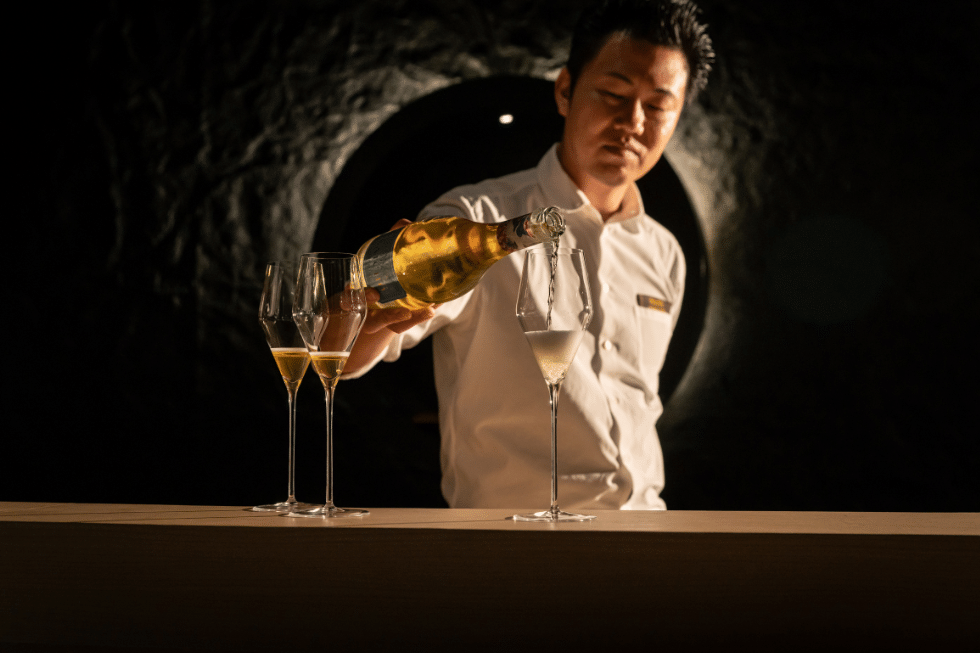
In fine dining, wine has long been the language sommeliers use to communicate flavour, texture and progression. Sparkling Tea is taking over.
Today a new dialect is emerging; sparkling tea is no longer simply an alternative for non-drinkers. It is becoming a serious pairing tool. At the forefront of this shift is Saicho. Its single-origin, cold-brewed sparkling teas are increasingly appearing on tasting menus at some of the world’s most progressive restaurants, where chefs and sommeliers are discovering that tea offers a different, and in some cases more precise, way to accompany food.
This growing momentum comes at a significant moment for the brand. Alongside its core range, Saicho has recently expanded its Rare Tea Collection with the launch of Minami Sayaka, a limited-edition sparkling tea sourced from the mountains of Miyazaki, Japan. Produced from a rare cultivar grown at high altitude and crafted by third-generation tea master Akira Miyazaki, the release reinforces Saicho’s focus on provenance, rarity and collectability, concepts already familiar to wine lovers.
A Sommelier’s Logic
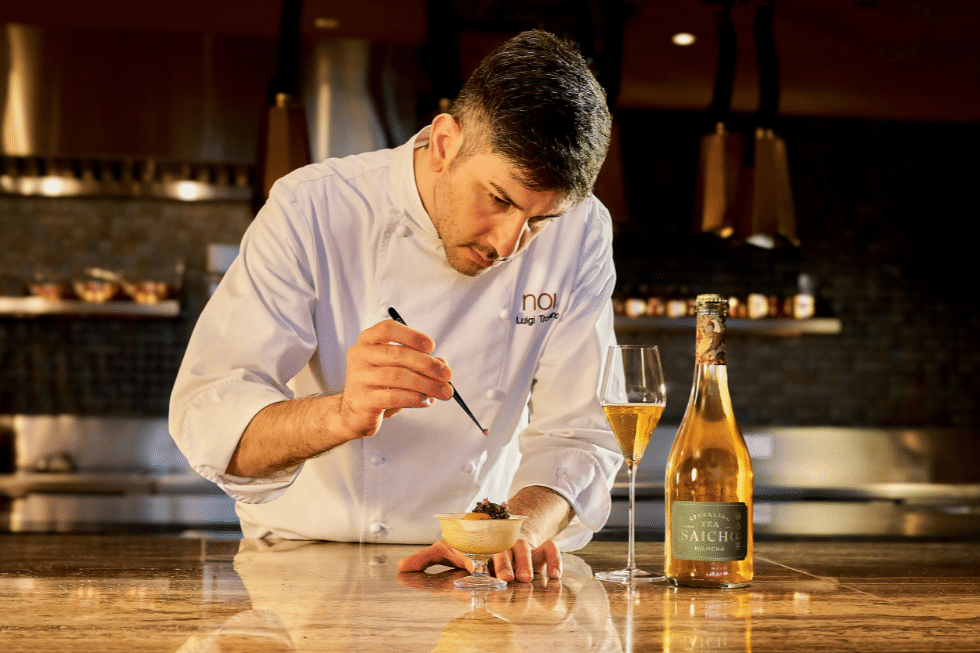
The appeal of sparkling tea begins with its structure. Like wine, each tea expresses a sense of place, shaped by origin, climate and production techniques. Saicho’s teas are cold brewed over 24 hours to preserve delicate aromatics while minimising bitterness. Balanced with gentle acidity, natural tannins and restrained sweetness, they offer many of the attribute’s sommeliers seek in wine, but without alcohol.
That combination has led to a growing interest among chefs and sommeliers looking to create sophisticated low- and no-alcohol pairing experiences. To explore the possibilities further, Saicho has launched a sparkling tea pairing challenge with chefs around the world, generating combinations that demonstrate the versatility of tea across a wide range of cuisines.
Chet Sharma’s Cultural Dialogue at BiBi
At London’s BiBi, chef Chet Sharma views sparkling tea not as a replacement for wine but as a cultural bridge. His modern Indian tasting menus are built around layers of spice, aroma and memory, demanding pairings that complement rather than dominate. Sparkling tea’s gentle structure allows the flavours within each dish to remain fully visible.
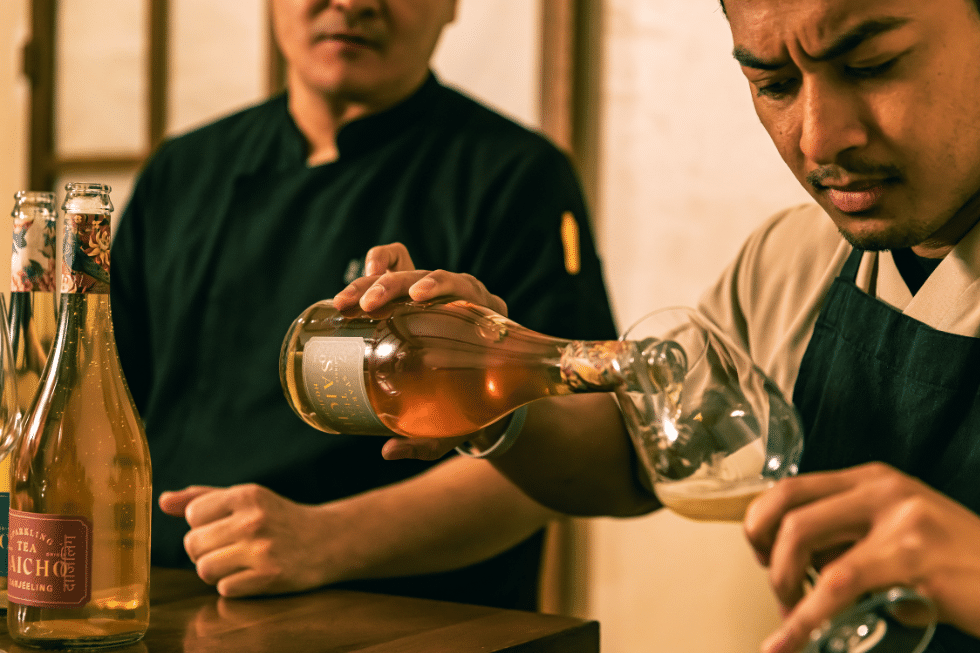
“When I came across Darjeeling sparkling tea, I thought we’ve got to feature this on the restaurant menu,” says Sharma. His jasmine pairings, particularly with seafood and citrus-led dishes, reveal the strengths of tea as a pairing medium. Floral aromatics provide lift like an aromatic white wine, while subtle sweetness softens acidity without adding weight. Crucially, the absence of alcohol allows spice nuances to remain front and centre.
Precision at Appalachia
If BiBi demonstrates emotional and cultural resonance, Appalachia shows technical precision. Chef Joe Laker and sommelier Harry Cooper treat sparkling tea with the same seriousness as any fine wine pairing. Their tasting menu uses tea as a structural component, integrated into the progression of the dining experience rather than offered as a secondary option.
“It’s very important to have a non-alcoholic pairing that mimics the quality of the wine and the food,” says Laker. At Appalachia, effervescence cleanses the palate between rich courses, tannins provide gentle grip, and layered aromatics evolve across multiple bites. Cooper notes that Saicho possesses the same essential qualities sommeliers seek in wine: provenance, terroir and distinctive flavour signatures. The result is a pairing programme that feels complete, rather than a compromise.
Elegance and Restraint in Hong Kong
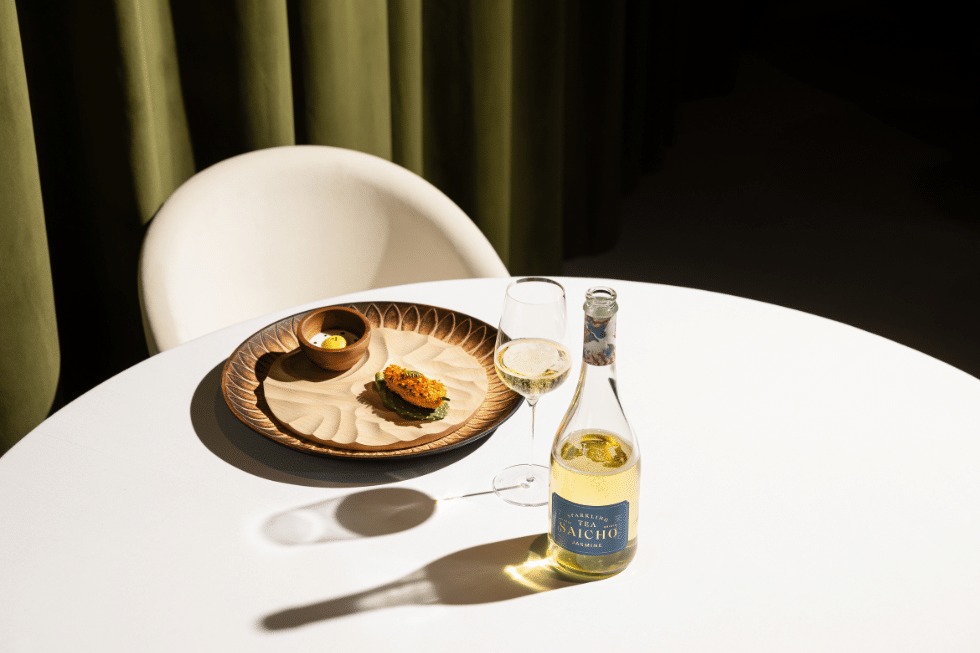
In Hong Kong, Chef Tiff Lo has embraced sparkling tea for a different reason: finesse. Her French-influenced cooking is defined by precision and restraint, making tea an ideal partner. Collaborative tasting menus featuring crudo and other delicate preparations have highlighted tea’s ability to enhance flavour without masking texture or salinity.
Expressions such as Osmanthus, with notes of apricot, honey and floral blossom, act almost like a seasoning. Rather than competing with ingredients, they amplify them, adding another dimension to the experience while preserving clarity.
Redefining Alcohol-Free Luxury in Dubai
Some of the strongest evidence for sparkling tea’s emergence as a fine-dining category can be found in Dubai.
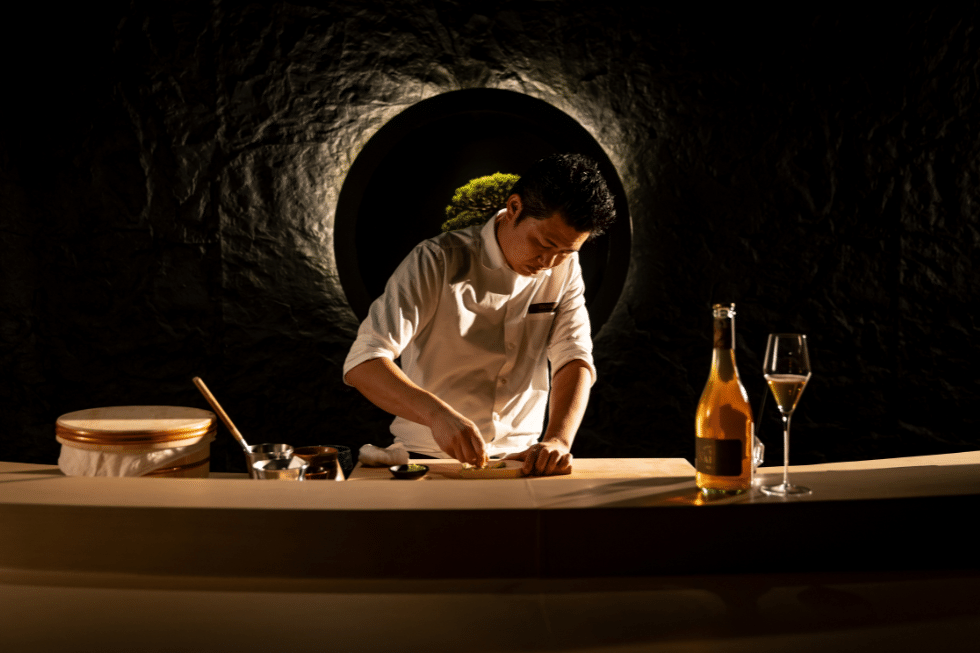
At venues including Trèsind Studio and TakaHisa, Saicho has featured in high-profile gastronomic events where luxury, innovation and hospitality intersect. Here, sparkling tea is presented not as an alternative to prestige beverages, but as a prestige beverage itself.
Chefs are particularly drawn to the storytelling potential of single-origin teas and the opportunity to create inclusive tasting menus without sacrificing sophistication. For guests seeking elevated alcohol-free experiences, sparkling tea offers depth, complexity and occasion.
A Shift, Not a Substitute
Across London, Hong Kong and Dubai, a common theme emerges. Chefs and sommeliers are not embracing sparkling tea because it imitates wine perfectly. They are embracing it because it offers something different. Tea provides precision, clarity and versatility. Without alcohol, flavours remain sharply defined. With terroir, tannin, acidity and aroma, it still speaks language sommeliers understand.
The arrival of rare releases such as Saicho’s limited-edition Minami Sayaka only strengthens that proposition, introducing notions of scarcity and collectability that traditionally belonged to wine. For a new generation of dining professionals, sparkling tea is no longer merely paired with food.
It is becoming part of the architecture of the meal itself.