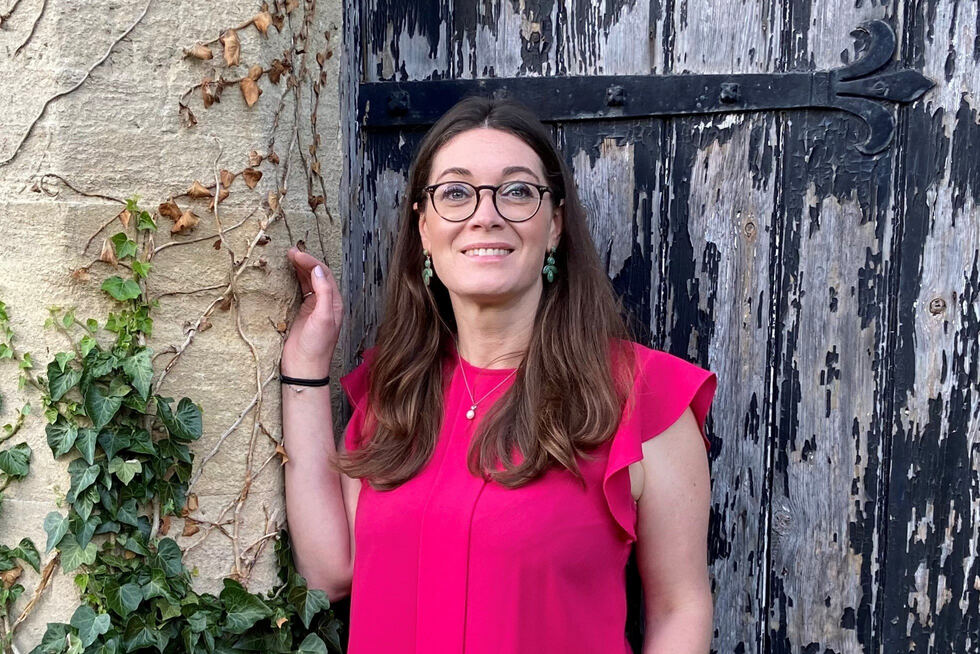
In the restrained Georgian grandeur of Bath’s Francis Hotel, a fire has been lit. Not just in the kitchen of its newly opened Emberwood restaurant – though there’s that too – but in the wine list, authored by none other than Claire Thevenot MS, a figure both revered and elusive, whose career has spanned Bernard Loiseau to Gérard Basset, Cologne to Chablis, and Winchester to Wiltshire.
Thevenot, the first French woman to achieve the coveted title of Master Sommelier, speaks with calm precision and earthy grace. ‘I grew up in a very rural part of Franche-Comté,’ she says, ‘next to the Vosges. My parents were farmers, and everything on our table came from the farm or the garden. We preserved food for winter. My mum was a very keen forager – she always took me with her. The outdoors was our playground, and we learned to respect nature.’
This formative closeness to the land made itself felt years later, when Thevenot left London for Bath just before the pandemic. ‘I thought I’d become a city girl,’ she admits, ‘but during lockdown I spent my hour of freedom in the fields, foraging – and realised how much I missed the proximity to nature. That’s when the idea of creating my own importing company really took hold. It was the ignition I needed.’
So Vins-Clairs was born – a portfolio rooted in provenance and principle. ‘The attachment to the land, the environment, and the protection of it is in my DNA. After years in the trade, setting up a list of likeminded producers felt purely natural.’
The Making of a Master Sommelier
Thevenot’s professional path took shape in the UK, where she joined Hotel du Vin in Brighton for its opening in October 2002. She became the protégé of Gérard Basset OBE MS MW MBA OIV MSc, under whose guidance she was named UK Sommelier of the Year in 2006 – and, at just 27, passed the gruelling Master Sommelier diploma.
But before even Basset’s stopwatch and blind tastings in a Hampshire head office, there was Tain l’Hermitage. ‘When I decided to go to sommelier school,’ she recalls, ‘I only applied to one. At our graduation, Bernard Loiseau said he only hired sommeliers from Tain. That struck a chord. I sent an application – no Plan B – and travelled from Cologne, where I was already working, for the interviews. The head teacher called my mum the next day to say I was in.’
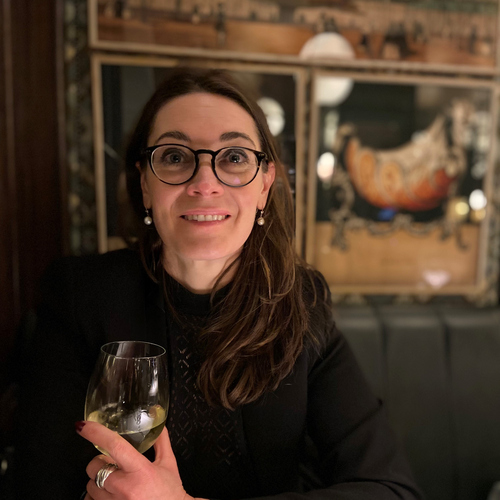
Loiseau’s kitchen became her crucible. ‘He was one of the first French chefs on TV – and his personality didn’t change off-camera. Passion, to the fullest.
I was the first female intern sommelier in his team, and under a lot of pressure. After our first service briefing, they sent me back to redo my hair – I wasn’t allowed to serve until my plait was tight enough.’
At the same time, Thevenot was studying for France’s best sommelier student competition. ‘The first three weeks were very intense. I came second. After the competition, the head sommelier and restaurant director took me under their wings. Bernard warmed up to me – we’d chat after service. It was a great summer. Hard work, intense and fun. I learnt a lot under them.’
Then came Basset. ‘He was more than a mentor. He always had time for his protégés – and vice versa. He was the kindest person I ever met. Always helping you unlock a level or pass a hurdle.’
Thevenot joined him at Hotel du Vin in Brighton, then moved to Winchester as Head Sommelier to support his preparation for the 2004 World Sommelier Competition. ‘I spent six months with a timer around my neck, crossing the road with trays of blind tastings and creating mock scenarios. In return, he enrolled me in the UK Sommelier competition and the Advanced MS exam.’
Her path to Master Sommelier was unusually fast. ‘Gerard gave me three weeks to prepare for the Advanced. I was shocked – I hadn’t studied in depth since school. I asked how I should revise, and he said, “Go home, study 24/7, don’t eat or sleep, and you’ll be fine.” Classic Gerard. To my surprise, I passed. The next year I sat the Master exam and passed Theory and Service with a heavy cold – I couldn’t smell anything – so I waited and passed Tasting the year after. The whole journey took less than two and a half years.’
Off the Floor, On Her Terms
After nearly two decades on the restaurant floor, Thevenot stepped into sales. ‘I joined Enotria in 2008. The first few months were difficult – I couldn’t sleep before 1am and wasn’t used to finishing at 6pm. Evenings were long. But I found new hobbies – running, meeting friends who didn’t work weekends. It was a new rhythm.’
Her importing company, Vins-Clairs, distils her values. ‘I’d been thinking about it for over a decade. COVID gave me the focus to write the plan. Starting on my own meant I had to streamline a lot – especially buying. The early producers were all French, working biodynamically, with a strong commitment to preserving biodiversity. For 2025, I’ve focused on value wines, but even the House wines follow the same ethos – quality and environmental care at every level.’
‘The best part of this journey so far,’ she adds, ‘has been the people. The enthusiasm of the producers – their trust – is invigorating. Some I encountered years ago and now call friends.
Many I met for this new adventure. Like Vins-Clairs, a good number of our growers are just starting out, releasing their first or second vintages. They’re learning from the elements, practising regenerative viticulture, and placing biodiversity at the heart of what they do.’
Ember and Stone: Writing a List for Bath’s Newest Flame
And so, to Emberwood – her latest collaboration and, in some sense, a return to the dining room. ‘The Francis Hotel is in the heart of historic Bath. The name Emberwood really spoke to me – “Ember” for the fire, “Wood” for the architect, John Wood the Elder. I’d just taken a guided tour of Bath with my family a few weeks before I was approached. Everything came together.’
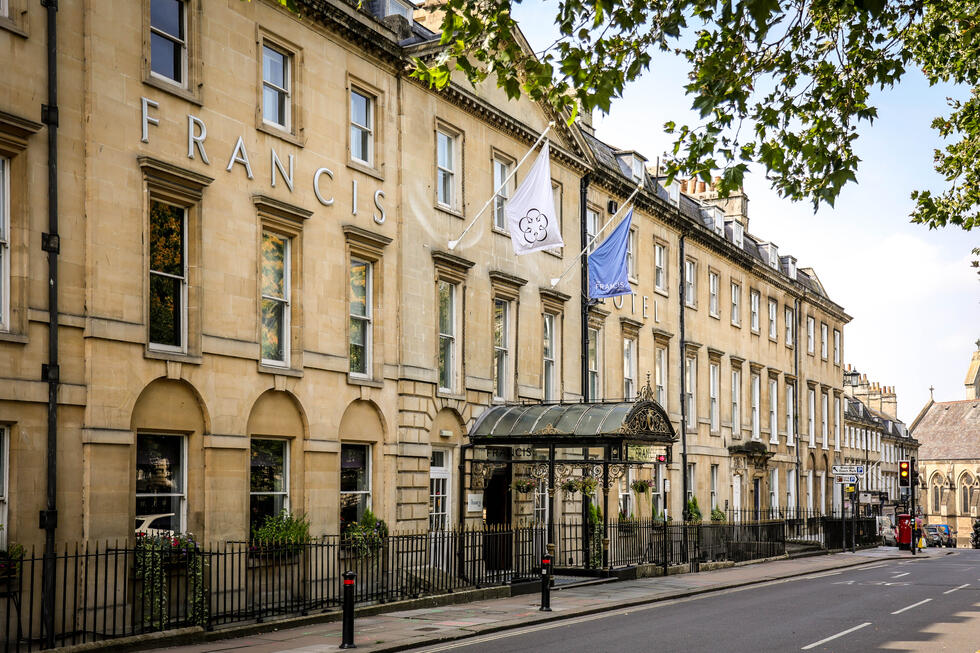
The list is shaped by two ideas: architecture and nature. ‘For the architectural side, a British brasserie needs its classics. I linked these to John Wood the Elder – Chablis, Sancerre, Rioja, Margaux, Saint-Émilion, Barolo, and Châteauneuf-du-Pape. Then came the son – John Wood the Younger – a generational shift I mirrored with a fresher Rioja, a more fragrant Châteauneuf, and a new-wave Sancerre.
And as with great architecture, so with wine – the mavericks matter. ‘Just as Norman Foster reshaped London’s skyline with the “Gherkin” (his firm also worked on Sulis Hospital here in Bath), I’ve included iconoclasts like Bodegas Frontonio in Spain – producers which shift perspectives.’
Nature, meanwhile, lives in the glass. ‘Bath is leafy, green, and agricultural. Many of the wines are organic, biodynamic, or natural – but without extremism. The list needs to appeal to both wine geeks and day-trippers. English wines have a whole page. The House Sparkling Brut comes from Hundred Hills in Oxfordshire. The Rosé is from Bluestone in Wiltshire – a stone’s throw from Stonehenge, which inspired John Wood.’
There are also what she calls the ‘Too Good Not To Be Listed’ bottles – wines which stopped her in her tracks. ‘A Listán Blanco from Tenerife. A Spätburgunder from Germany. And some of the stunning wines from the New California.’
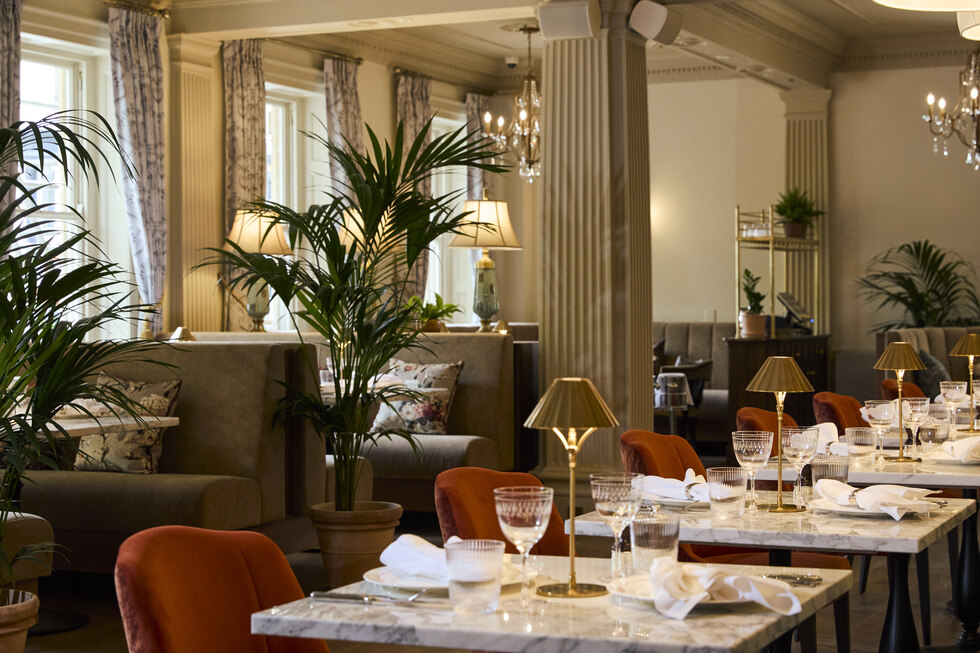
And the food? ‘I understood the brief straight away – bold flavours, fire-cooked. You need contrast. Lighter, fresher reds, less extraction, not too alcoholic. The food tastings confirmed it all.’
When asked for the advice which stuck, Thevenot doesn’t hesitate: ‘Don’t leave anything you can do today for tomorrow.’ And her dream lunch? ‘My brother, Manu, who left us too early. A côte de boeuf on the barbecue, and his favourite – a red Saint-Joseph.’
Thevenot may no longer work the floor night after night, but the floor, it seems, never really leaves her. ‘Hospitality was always my first love. I leave space for the next generation to thrive – but I’m always available if they reach out.’
As they should. Because few wear mastery with such grace – or such fire.
vins-clairs.com / @vin-clairs / francishotel.com/restaurant